

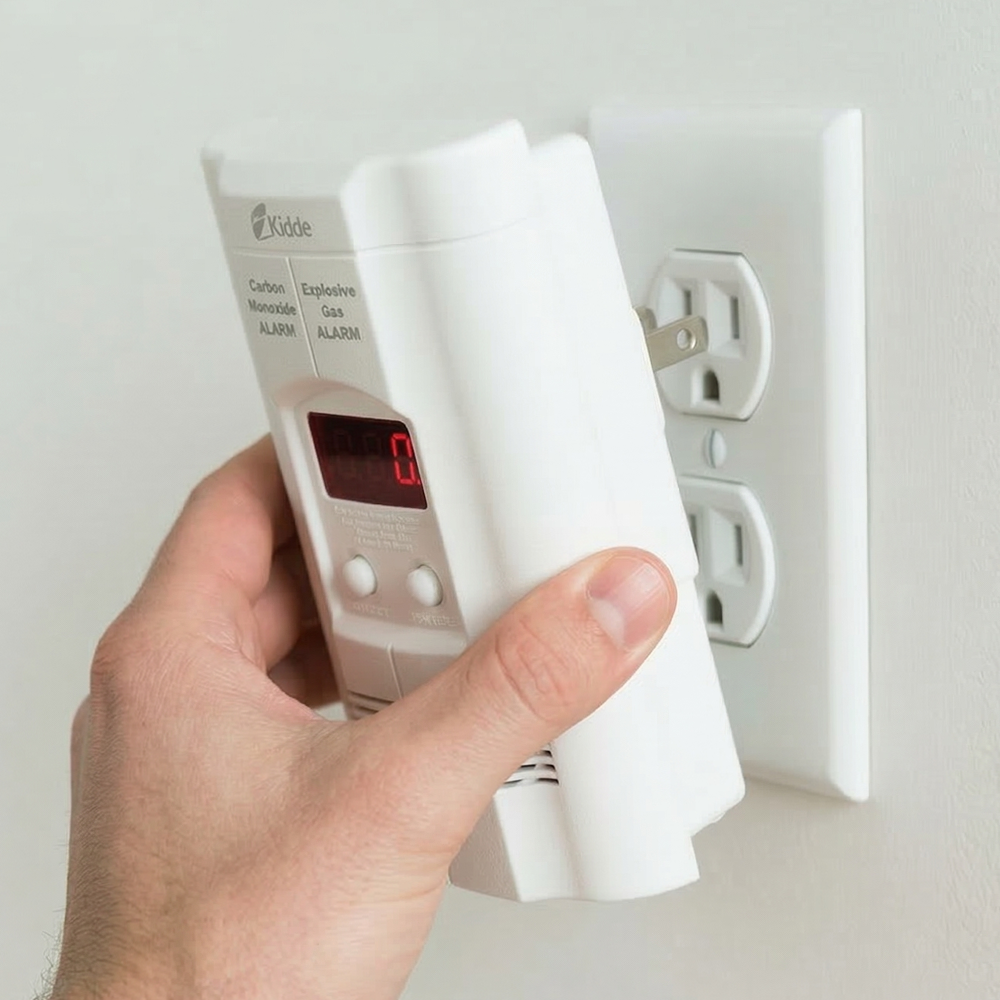
Home Safety & Air Quality: What Most Homes Get Wrong
Disclaimer: DontPickIt is reader-supported. When you buy through links on our site, we may earn an affiliate commission at no extra cost to you. We evaluate gear based on real-world performance to help you avoid bad tech.
Walk through your house. Count what’s actually protecting your home safety and air quality. Not what came with the place. Not what the builder put in 15 years ago. What you installed yourself and tested this month.
For most homes, the answer is nothing. Smoke detector from 2016. CO detector? Maybe one. Gas detector? Probably none. Water leak sensor? Almost certainly none. Air purifier? Might have bought one during wildfire season and never changed the filter.
The CDC counts 430 CO deaths per year. The EPA says indoor air quality is 2 to 5 times worse than outdoor air. Water leaks do $13 billion in damage annually. Every one of those numbers is someone who’d trade their smart thermostat for a $50 detector if they could go back.
This home safety and air quality guide covers four threats: gas leaks, water leaks, bad air, and wrong humidity. What to buy. Where to put it. What to skip.
How Home Safety Threats Overlap (And Why That Matters)
These problems overlap. A gas leak travels through the same indoor air your purifier cleans. High humidity feeds mold that triggers allergies your air purifier is supposed to fix. A burst pipe floods your basement. Within weeks, mold colonizes the drywall and pumps spores into the air you paid to filter.
They overlap, but you can’t fix them all at once. Here’s the order to deal with them — what to address first, and why:
- Gas & carbon monoxide — the one that can kill you tonight. No smell. No warning. You go to sleep. You don’t wake up.
- Water leaks — won’t kill you, but a burst pipe can destroy floors, walls, and belongings in a few hours. Structural damage starts fast.
- Bad air — the slow one. Takes years off your lungs, one particle at a time. Easy to ignore. Hard to reverse.
- Wrong humidity — the enabler. Too much or too little moisture makes everything above harder to control.
1. Gas Leak Detection & Carbon Monoxide Safety
CO has no smell. Not faint. Zero. Your nose cannot detect it. Neither can your dog’s. Natural gas has that rotten-egg odor the utility company adds, but during deep sleep your sense of smell mostly stops working. You will not wake up from the smell of a gas leak.
CO poisoning makes you sleepy first. Then unconscious. Then dead. The symptoms feel like normal tiredness — which is exactly why it kills. You think you need an early night. You don’t wake up.
CO Detector vs Gas Detector: Not the Same Thing
They use different sensors. A CO detector won’t catch natural gas. A gas detector won’t catch CO. If you have a gas furnace, stove, water heater, or dryer, you need both. Combo units do both in one device.
UL Certification: Non-Negotiable
UL means the device was independently tested for sensor accuracy, alarm loudness, and failure resistance. Most cheap detectors on Amazon skip this. They have LCD screens and 4.5 stars. They’re not UL listed. Without UL certification, you’re trusting a random manufacturer’s promise. Don’t.
Placement
- CO detector on every floor, outside sleeping areas. CO mixes with air evenly.
- Natural gas detector near ceiling — methane rises.
- Propane detector near floor — propane sinks.
- Never in corners or behind doors. Dead air zones don’t trigger sensors.
Our Pick: Kidde KN-COEG-3
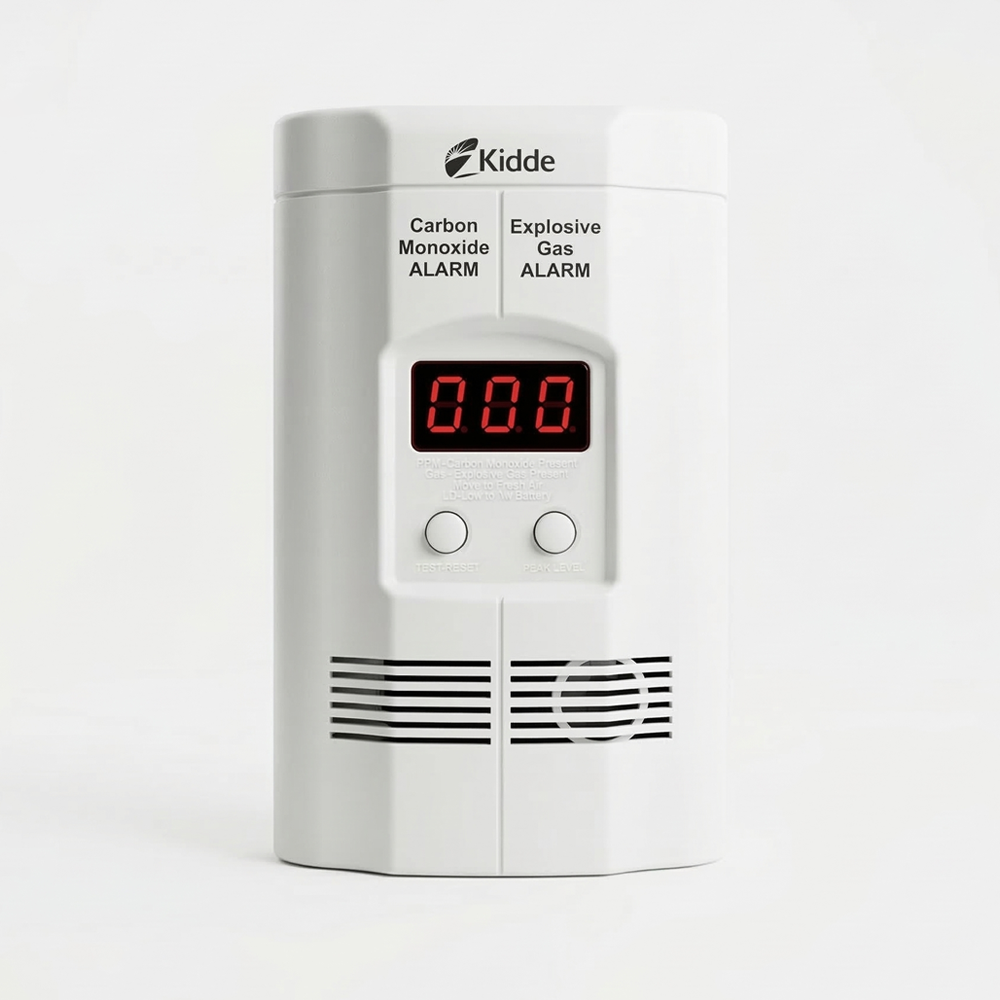
| Performance & Accuracy | 23/25 |
| Reliability & Durability | 24/25 |
| Ease of Use & Cleaning | 15/20 |
| Design & Safety | 14/15 |
| Price-to-Performance | 11/15 |
| Value Index | 87/100 |
Dual sensor: CO and explosive gas. Plugs into wall outlet. 9V battery backup — we pulled the plug and it kept running. 85 dB alarm at 10 feet. UL certified. Peak level memory. One button. No screen. No app. Replace every 7 years — the sensor degrades.
Trade-off: No LCD. No voice. It’s a white plastic brick. That’s fine. It detects gas. That’s the job.
What to Avoid
DO NOT BUY the NICGOL 4-in-1. No UL certification. No battery backup. When the power goes out — which is when furnaces back up and CO builds — this thing stays dark. We tested it. 10/100. Full NICGOL review
2. Water Leak Prevention & Detection
A washing machine hose moves 600 gallons per hour. It’s held on by a $3 rubber gasket. When that gasket cracks — and it will — your laundry room floods in 20 minutes. Average water damage claim: $11,000.
A $20 sensor catches this.
Where to Put Them
Leaks happen at connections. Hoses. Fittings. Valves. Not in the middle of the floor.
- Under washing machine (both hoses)
- Under water heater (pressure relief valve drips before it fails)
- Under every sink (kitchen, bathrooms, utility room)
- Behind every toilet (supply line)
- Near dishwasher (supply and drain)
- Near HVAC condensate line
- Near sump pump
Seven sensors for a typical 3-bedroom house. About $140 total.
What to Look For
- 85 dB+ audible alarm.
- Phone alerts. This is the one category where “smart” matters — you need to know when you’re not home.
- Metal contact probes. Not plastic. Faster detection, no corrosion.
Our Pick: SwitchBot Water Leak Detector
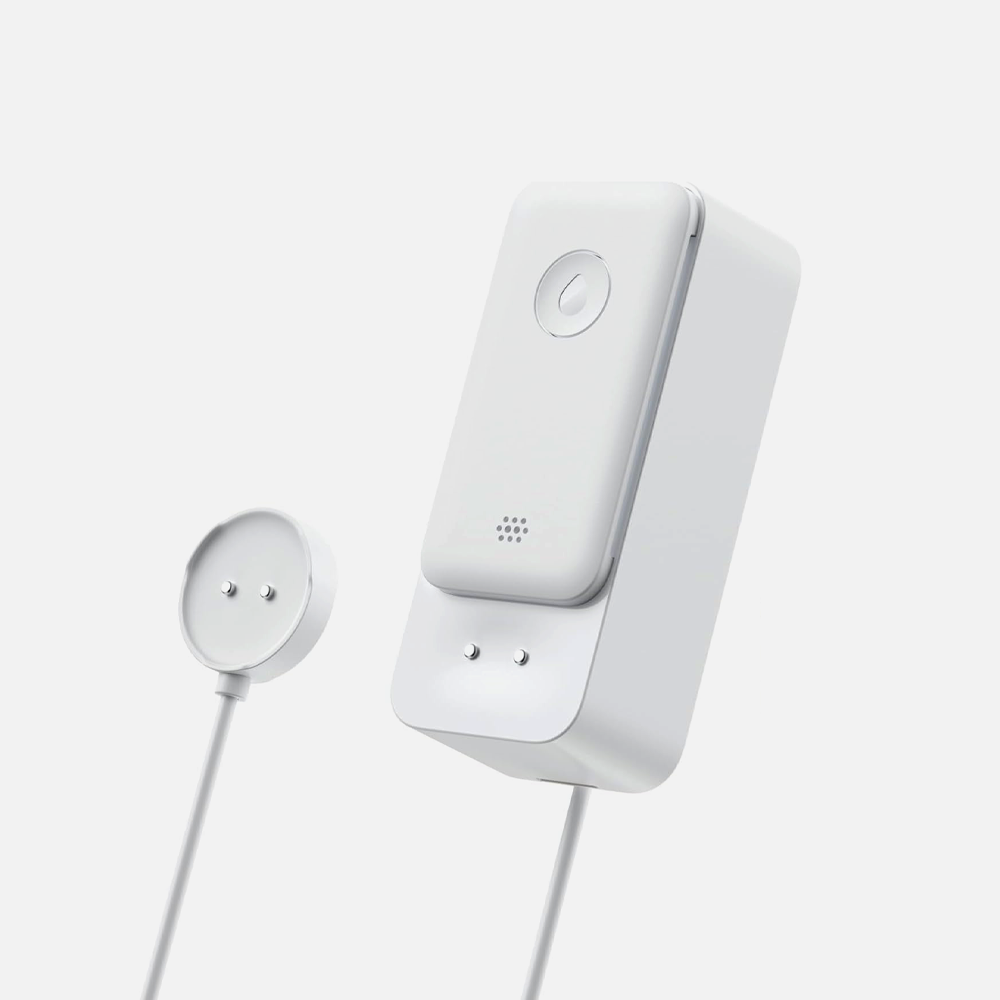
| Performance & Accuracy | 22/25 |
| Reliability & Durability | 21/25 |
| Ease of Use & Cleaning | 18/20 |
| Design & Safety | 12/15 |
| Price-to-Performance | 15/15 |
| Value Index | 88/100 |
Four metal probes. Water bridges any two — alarm triggers. 100 dB siren. Phone alerts via SwitchBot Hub (extra $30 — get it). IP67 waterproof. 2-year battery on CR123A.
Trade-off: Hub required for remote alerts. You’re buying into an ecosystem.
3. Air Purifiers & Indoor Air Quality
HEPA filter in a leaky box = desk fan with marketing. The seal between filter and chassis is what separates a real purifier from a noise machine.
We tested five units under $100. Four moved less air than a box fan with a furnace filter taped to it. One worked.
CADR: The Only Number That Matters
Clean Air Delivery Rate. Cubic feet of clean air per minute. Not fan speed. Not filter thickness.
If the box doesn’t list CADR, the manufacturer doesn’t want you to know it. Walk away.
Rule: CADR should be at least 2/3 of your room’s square footage. 150 sq ft room needs CADR 100+. Two small units beat one big unit trying to cover the whole house. Air doesn’t go around corners.
Filter Types
- True HEPA: catches 99.97% at 0.3 microns. “HEPA-type” or “HEPA-like” = fake. Those are made-up words.
- Activated carbon: removes smells and VOCs. Budget purifiers use a carbon sheet you can see through. Decoration, not filtration.
- Ionizers: produce ozone. Ozone is a lung irritant. If you can’t turn the ionizer off, don’t buy it.
Our Pick: Levoit Core 300
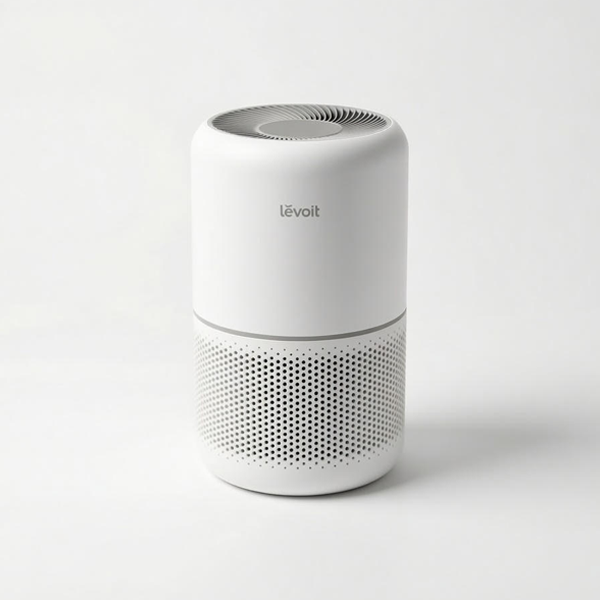
| Performance & Accuracy | 21/25 |
| Reliability & Durability | 23/25 |
| Ease of Use & Cleaning | 19/20 |
| Design & Safety | 13/15 |
| Price-to-Performance | 14/15 |
| Value Index | 90/100 |
We ran it 24/7 for six months. Two dogs, one cat, window facing a busy street. Pre-filter went grey in three weeks. HEPA lasted six months. Replacement filters: $30 each, budget $60/year. Tight HEPA seal — no air bypass. Zero ozone.
Three speeds. One button. Speed 3 = 52 dB at 3 feet (conversation-level). Sleep Mode = 24 dB (near silent, but moves little air). For allergies, keep it on Speed 2.
Trade-off: No smart features. Noisy on high. 150 sq ft max effective coverage.
4. Humidity Control: Humidifier vs Dehumidifier
Buy a $10 hygrometer. Put one on each floor. Wait 24 hours. The number tells you what to fix.
Humidity varies drastically inside a single house. A heated upstairs bedroom in winter can run below 20%. A basement in summer can hit 70%. Same house. Same day. You won’t feel the difference right away — that’s the problem. By the time your skin is cracking or the baseboard smells musty, the air has been too dry or too wet for weeks. A $10 hygrometer catches it before you do.
What the Numbers Mean
- Below 25%: nasal passages crack, more susceptible to colds. Wood shrinks and splits. Static on everything.
- 30–50%: the zone. Dust mites can’t reproduce. Mold can’t germinate.
- Above 60%: mold activates. Dust mites explode. Condensation inside walls. That musty smell = mold waste in your air.
Humidifier vs Dehumidifier vs Air Purifier
Three different machines. Humidifier adds moisture. Dehumidifier removes it. Air purifier removes particles. Buy the wrong one and you’ve made the problem worse. Full comparison
If Your Air Is Too Dry: Humidifier
Evaporative = safest. Self-regulating. No white dust. Ultrasonic = quieter but blasts mineral particles into the air. Use distilled water or you’ll get white dust on everything. Side-by-side comparison
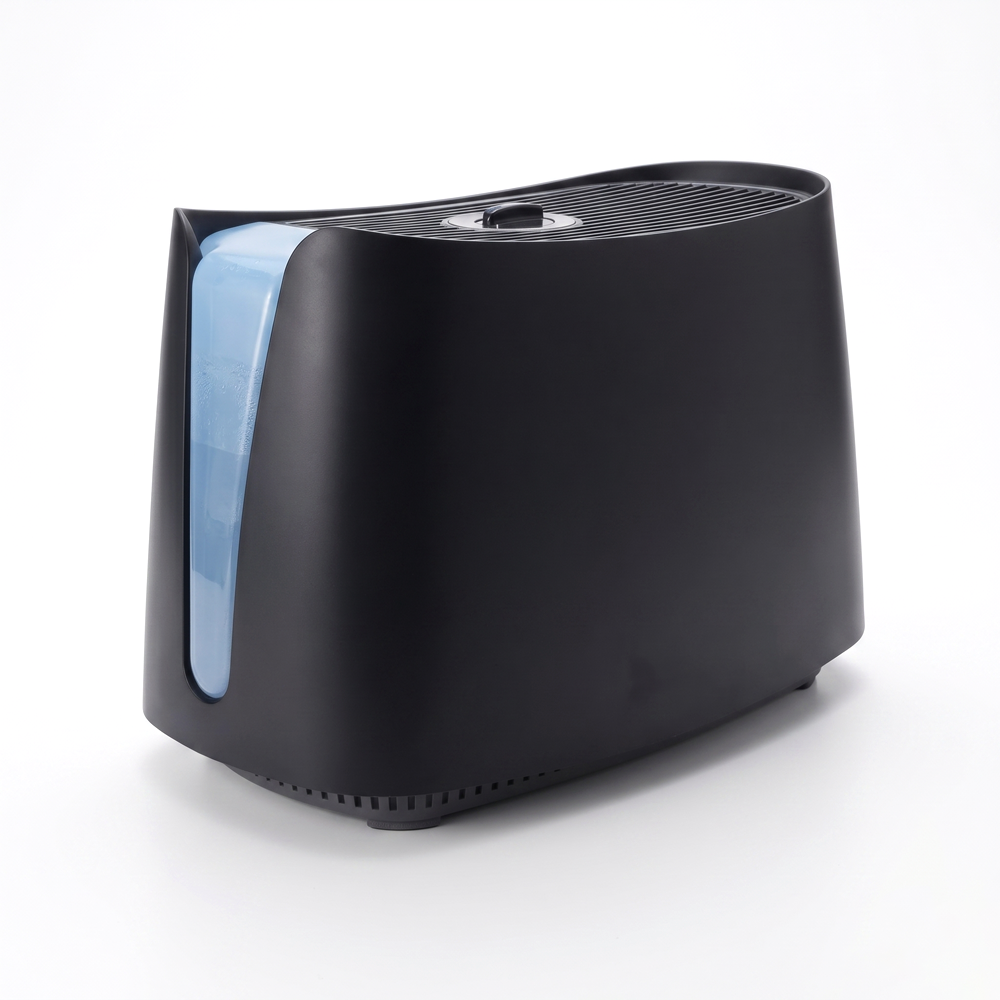
Our Pick: Honeywell HCM-350B
| Performance & Accuracy | 22/25 |
| Reliability & Durability | 23/25 |
| Ease of Use & Cleaning | 19/20 |
| Design & Safety | 11/15 |
| Price-to-Performance | 14/15 |
| Value Index | 89/100 |
Evaporative. No white dust. Self-regulating — can’t over-humidify. UV light kills bacteria in the tank. Dishwasher-safe parts. Wick filters: replace every 1-2 months, $12 each. Covers ~500 sq ft.
Trade-off: Ugly. Looks like medical equipment. Fan is audible. Wick filters are a recurring cost.
If Your Air Is Too Damp: Dehumidifier
Size it right. A 30-pint unit in a 2,000 sq ft basement is a waste of electricity. Use our sizing guide
Other Home Safety Threats: Smoke Detectors & Radon
Smoke Detectors
Not air quality. But you need them. One per floor. Outside sleeping areas. Test monthly. Replace every 10 years — the sensor degrades. A 12-year-old smoke detector is a plastic decoration. Smoke detectors don’t detect CO. CO detectors don’t detect smoke. You need both.
Radon
Radioactive gas from the ground. #2 cause of lung cancer in the US. No smell. No taste. $15 test kit at any hardware store. Leave in basement 48 hours. If above 4 pCi/L, install a mitigation system ($800-1,500). Full guide coming soon.
Home Safety Action Plan: 8 Weeks to a Safer Home
Week 1: Non-Negotiables
- Test every smoke detector. No alarm or older than 2016? Replace.
- One CO detector per floor. $25-50 each. Plug-in with battery backup. Outside sleeping areas.
- Buy a hygrometer. $10. Put it in your bedroom.
Week 2-3: Big Risks
- Explosive gas detector if you have gas appliances. Combo CO + gas unit covers both.
- Water leak detectors: washing machine, water heater, sinks, toilets. Start with washer and water heater — those hoses fail first.
Week 4-6: What You Breathe
- Air purifier in bedroom. Match CADR to room size.
- Fix humidity. Below 30%? Humidifier. Above 50%? Dehumidifier.
Week 7-8: Finish the System
- Air purifier in living area.
- Walk every room. Check behind fridge, under vanity, HVAC condensate line. There’s always one spot you missed.
- Write install dates on everything with a Sharpie.
- Bare minimum: $60-120
- Full system: $490-870
Compare to: one CO hospital visit ($3,000+). One water damage claim ($5,000-11,000). One radon problem ignored (worse).
Questions We Get All The Time
Do I need a gas detector if I already have CO detectors?
Yes. Different sensor. Different gas. One doesn’t detect the other. If you have gas appliances, get a combo unit that covers both.
Can one air purifier clean my whole house?
No. Air purifiers work in single rooms. Air doesn’t go around corners. Two mid-sized units in the rooms you actually use beat one giant unit.
Where exactly do I put a water leak detector?
At every connection point. Washing machine hoses. Water heater supply and relief valve. Sink supply lines and P-traps. Toilet supply valves. Dishwasher connections. HVAC condensate line. Sump pump. Leaks happen at joints and gaskets.
What’s the difference between a smoke detector and a CO detector?
Smoke detectors detect combustion particles. CO detectors detect carbon monoxide gas. Different sensors. Different threats. You need both. Combo smoke/CO units are fine if UL listed.
The DontPickIt Verdict
Don’t Follow This Guide If: you want the cheapest version of everything. A $15 uncertified detector is a false sense of security with a wall plug.
Follow This Guide If: you want a room-by-room plan using gear we actually tested, placed where it actually matters. Start at Week 1. Work through the list.
More Home Safety & Air Quality Guides
SwitchBot Water Leak Detector Review — 88/100. $20. Four metal probes.
Kidde CO & Gas Detector Review — 87/100. Survived our power-failure test.
NICGOL 4-in-1 Review — 10/100. Read before you buy anything cheap with an LCD.
Gas Detector Placement Guide — Height matters more than brand.
Levoit Core 300 Review — 90/100. Six months of dust and decibel readings.
Best Air Purifier Buying Guide — 3 models compared.
Honeywell HCM-350 Review — 89/100. Three months. The wick filters were carnage.
Ultrasonic vs Evaporative Humidifiers — White dust, bacteria, and which type for your bedroom.
Humidifier vs Dehumidifier vs Air Purifier — Buy the wrong one, make it worse.
How to Choose a Dehumidifier — Pint capacity by room size.
Meet the Team
DontPickIt Home Lab
Your home is a complex ecosystem. We analyze everything that plugs in, turns on, or helps you relax. From mastering your indoor climate to automating your kitchen and cleaning routines, we test products against dust, hard water, and daily chaos. Our goal: finding tools that solve problems without creating new ones. Questions? Contact us.