

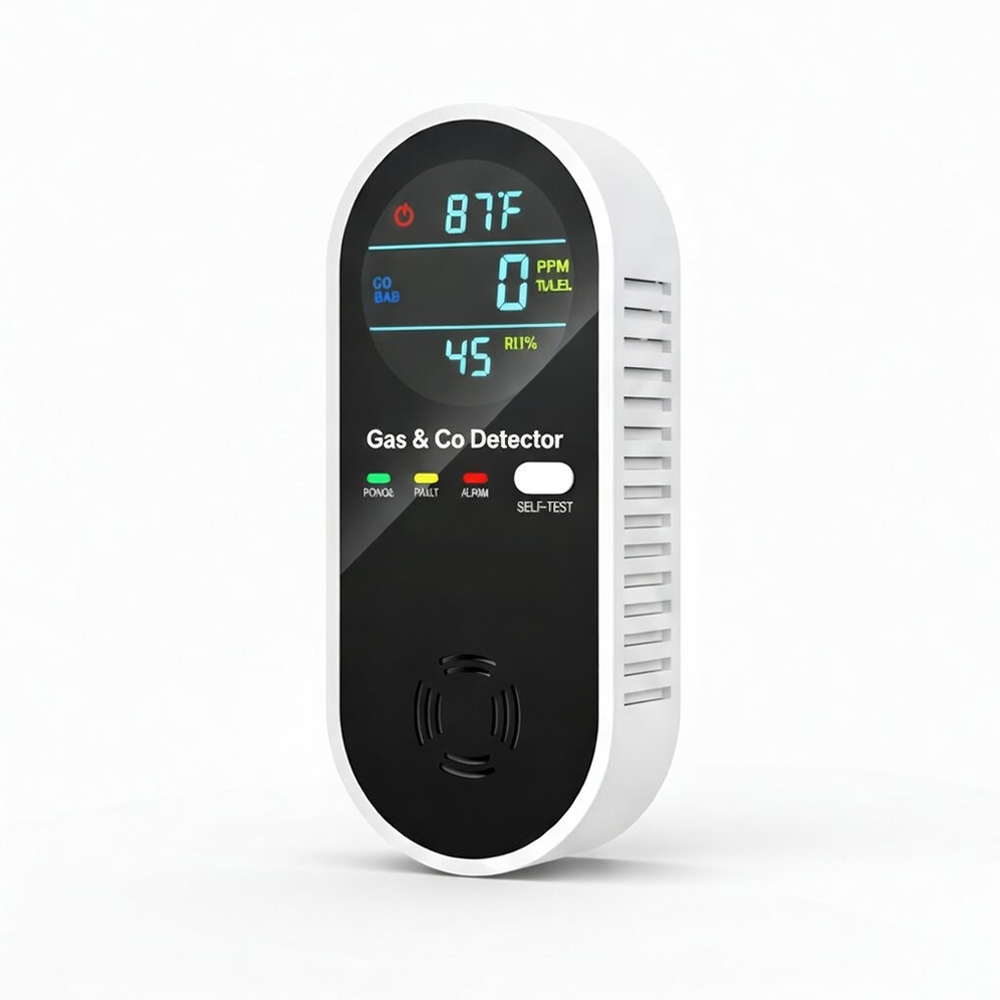
NICGOL 4-in-1 Gas Detector Review 2026: DO NOT BUY
Disclaimer: DontPickIt is reader-supported. When you buy through links on our site, we may earn an affiliate commission at no extra cost to you. We evaluate gear based on real-world performance to help you avoid bad tech.
Part of our Home Safety & Air Quality Guide — covering gas detection, air purification, humidity control, and water leak prevention.
Welcome to another review from the DontPickIt Household lab. We tested the NICGOL 4-in-1 Gas and CO Detector — hoping for an affordable, reliable home safety device.
Our verdict: DON’T PICK IT. This NICGOL review ends at 10/100. Do not trust your life to this detector.
Buy the Kidde Plug-in Carbon Monoxide & Explosive Gas Detector instead. UL certified. Battery backup. Actually works.
NICGOL Gas Detector Review: 3 Fatal Flaws
The Nicgol boasts a fancy color LCD and 4-in-1 features, but our lab tests revealed severe engineering oversights that make it a massive liability rather than a safeguard:
1. No Battery Backup — Useless During a Power Outage
This is the absolute dealbreaker. The Nicgol unit relies 100% on your wall outlet. In a severe storm or a major household emergency—exactly when heating systems fail or gas line issues are most likely to occur—your power grid might go out. When the power drops, the Nicgol dies instantly, leaving you completely unprotected from both combustible gas leaks and CO buildup. A safety device without a battery backup leaves your property and family vulnerable in a real crisis.
2. Slow Sensor Response — The 3-Minute Detection Delay
Every time the device is plugged in or recovers from a power flicker, it requires a mandatory 180-second warm-up period. During this time, the sensors are completely blind. If there is already a gas leak happening during this recalibration cycle, the alarm will not sound to warn you.
3. No UL Certification — Why That Matters for Home Gas Safety
When dealing with explosive gases (like natural gas and propane) and Carbon Monoxide, you need hardware tested by independent safety organizations. The Nicgol lacks the transparent, rigorous North American safety certifications (like UL approval) found in legacy brands, making its accuracy highly questionable over the long term.
The Installation Trap: Why Placement Could Cost Your Property and Life
Even if a budget detector like the Nicgol manages to power on, its rigid plug-in design forces you to rely on where your wall outlets are located. Did you know that natural gas rises to the ceiling, while propane sinks to the floor? Plugging a detector into the wrong-height outlet creates a fatal blind spot. Read our complete physics guide: Why Where You Plug Your Gas Detector Matters More Than the Brand to ensure you aren’t making a deadly installation mistake.
What to Buy Instead: The Kidde Plug-in Detector
Home safety is the one category where you should never buy the cheapest option. After failing the Nicgol, we re-evaluated the market and established the Kidde Plug-in Gas & CO Detector (3rd Edition) as our top Household recommendation for 2026.
Here is why it completely destroys the Nicgol in our head-to-head comparison:
- 9V Battery Backup Included: Kidde understands emergencies. If your power grid fails, the included 9V battery immediately takes over, ensuring your life and property are monitored 24/7 without interruption.
- 100% UL Certified: Kidde is a legacy brand that writes the book on fire safety. This device meets strict UL safety standards and local fire codes. You are paying for guaranteed compliance and peace of mind.
- Peak Level Memory: Even if you aren’t home, the digital display on the Kidde detector remembers the highest CO level it recorded, allowing you to catch slow, hidden leaks before they become disasters.
- Loud 85-Decibel Alarm: When danger is detected, it unleashes an 85dB siren that will wake you from a deep sleep.
[BUY THE KIDDE DETECTOR ON AMAZON]
FAQ: Questions From Our Lab Notes
Why do some budget gas detectors get removed from online stores suddenly?
Sudden removals in the life-safety category are massive red flags. They typically occur when a product fails to meet strict compliance standards, lacks recognized third-party safety certifications (like UL approval), or receives severe user safety complaints.
What happens to a standard plug-in gas detector during a power outage?
If the detector does not have a built-in battery backup, it will shut down completely when the power goes out. This leaves your home and family entirely unprotected during severe weather or grid failures—times when heating equipment malfunctions and gas risks are often highest.
Are “4-in-1” detectors with temperature and humidity displays worth it?
While extra features look great on paper, they should never come at the expense of core safety features. A reliable, certified detector with a battery backup is infinitely more valuable for protecting your property than a multi-functional device that dies during a blackout.
Why is UL certification so critical for gas and CO alarms?
UL (Underwriters Laboratories) certification guarantees that the device has undergone rigorous, independent testing to meet North American fire and safety codes. Uncertified devices have not proven their reliability, sensor accuracy, or durability in a verified lab setting.
Will the Kidde Plug-in Detector continue to work if my house loses power?
Yes. Unlike budget plug-only models, the Kidde Plug-in Detector features a 9V battery backup. It will continue to actively monitor your home for explosive gases and carbon monoxide even during a complete electrical outage.
NICGOL vs Kidde: which gas detector should I buy?
The Kidde KN-COEG-3. It costs about $15 more. UL certified. 9V battery backup. When the power goes out — and that’s exactly when furnace malfunctions and generator use push CO risk up — the Kidde keeps running. The NICGOL goes dark. There’s your answer. Read our full Kidde review.
Can a CO detector also detect natural gas leaks?
No. CO detectors and explosive gas detectors use completely different sensor technologies. A CO detector will not alert you to a natural gas leak. If you have gas appliances, you need a combo unit like the Kidde that covers both. Learn where to install each type.
Final Verdict: The “DontPickIt” Score
Nicgol 4-in-1: 10/100 (Failed – High Risk, No Battery Backup, Uncertified)
Kidde Plug-in: 87/100 (Top Pick – UL Certified, 9V Battery Backup, Highly Reliable)
Don’t wait until an emergency to realize you bought the wrong detector. Make the smart choice today to protect your home and family.
Related Home Safety Guides
Home Safety & Air Quality: Complete Guide — Start here.
Kidde CO & Explosive Gas Detector Review — The one we recommend. 87/100.
Gas Detector Placement Guide — Where you mount it matters more than which one you buy.
Meet the Team
DontPickIt Home Lab
“Your home is a complex ecosystem. We analyze everything that plugs in, turns on, or helps you relax. From mastering your indoor climate to automating your kitchen and cleaning routines, we test products against dust, hard water, and daily chaos. Our goal: finding tools that solve problems without creating new ones.”