

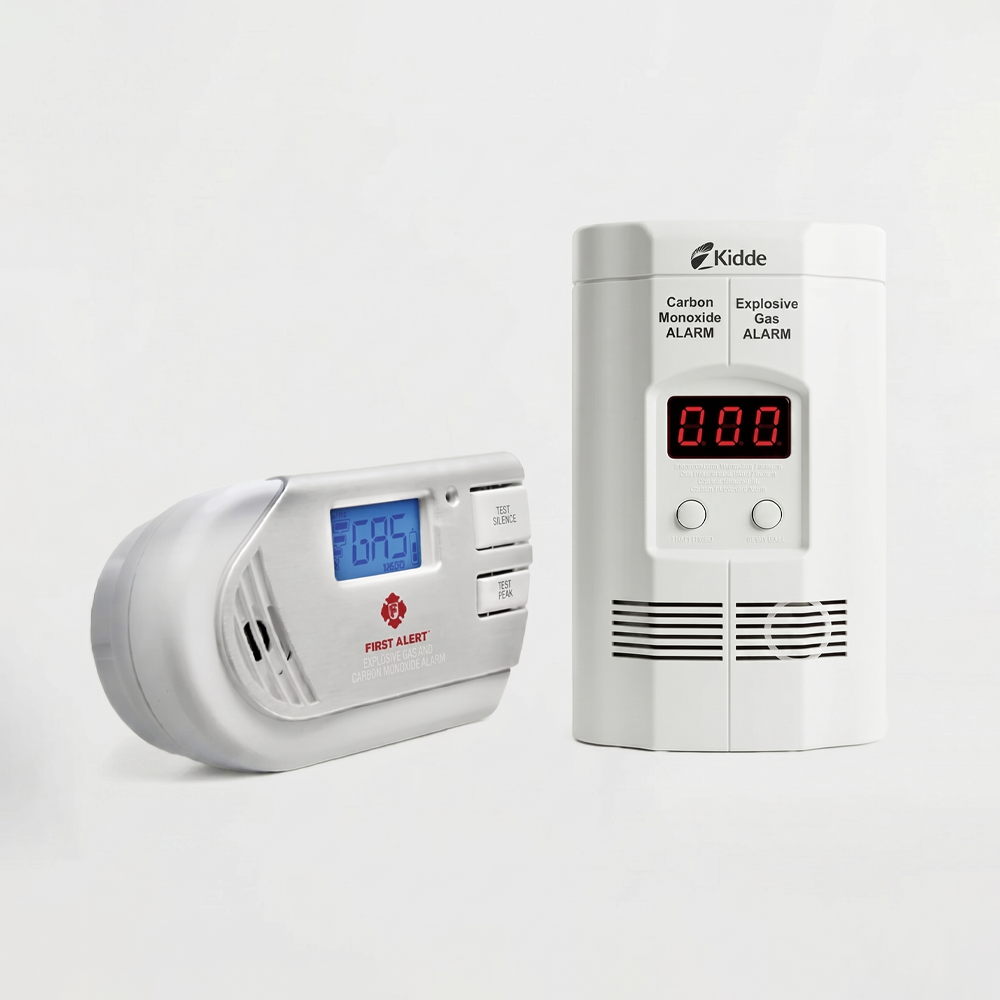
Kidde vs First Alert (2026): Which CO & Gas Detector Should You Buy?
Disclaimer: DontPickIt is reader-supported. When you buy through links on our site, we may earn an affiliate commission at no extra cost to you. We evaluate gear based on real-world performance to help you avoid bad tech.
Part of our Home Safety & Air Quality Guide — a complete roadmap to protecting every room in your home. Covers dehumidifiers, air purifiers, humidity control, gas detectors, and water leak sensors.
The Short Answer
For most rooms, buy the First Alert GCO1CN. It costs less, comes with a 10-year warranty, and has a backlit display and remote mute — features the Kidde lacks entirely. It’s the better product for less money.
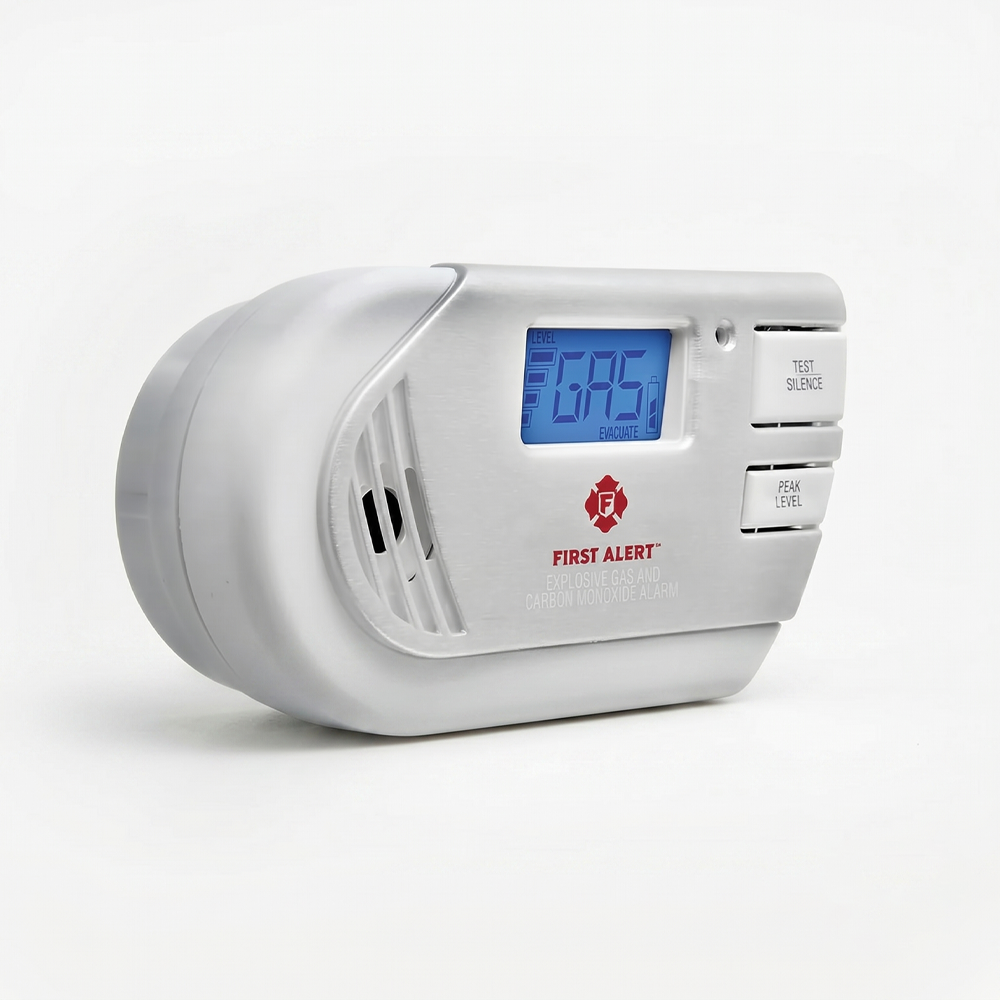
| Performance & Accuracy | 22/25 |
| Reliability & Durability | 23/25 |
| Ease of Use & Cleaning | 18/20 |
| Design & Safety | 13/15 |
| Price-to-Performance | 14/15 |
| Value Index | 90/100 |
The one reason to buy the Kidde KN-COEG-3 instead: the 6-foot power cord. If your nearest outlet is far from where the detector needs to mount — a common problem when mounting high for natural gas — the Kidde reaches. The First Alert’s 40-inch cord won’t. That’s it. That’s the entire decision.
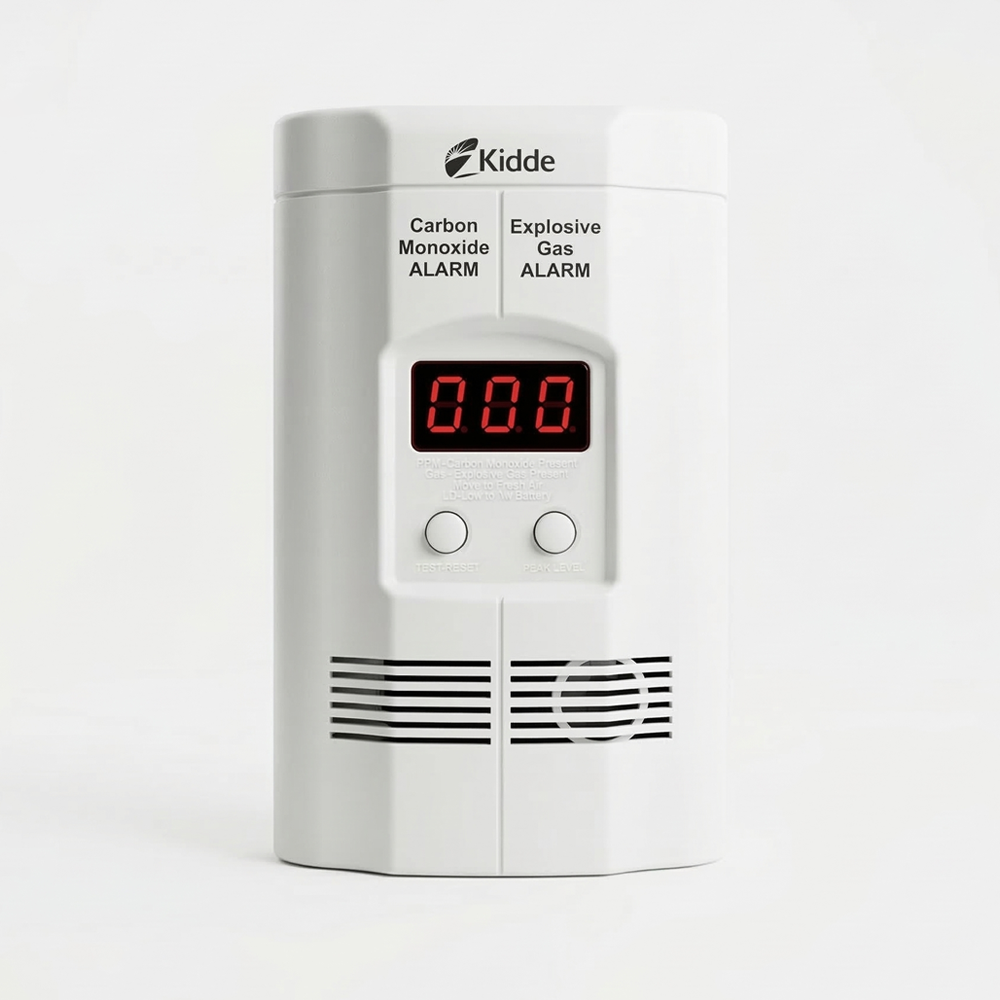
| Performance & Accuracy | 23/25 |
| Reliability & Durability | 24/25 |
| Ease of Use & Cleaning | 15/20 |
| Design & Safety | 14/15 |
| Price-to-Performance | 11/15 |
| Value Index | 87/100 |
Keep reading for the specifics, or just buy the First Alert and move on with your life.
Why the First Alert Wins on Paper
The First Alert GCO1CN costs less than the Kidde and out-specs it on nearly every feature that matters day to day. Here’s the breakdown:
Price: First Alert Is Cheaper
The First Alert typically sells for less than the Kidde. For a device you’ll buy at least two of — one near the kitchen for gas, one near bedrooms for CO — that difference adds up.
Warranty: 10 Years vs. 6 Years
The First Alert comes with a written 10-year limited warranty. The Kidde offers 6 years. Both outlast the sensor (which degrades after 5-7 years), but the extra four years of coverage favor First Alert.
Remote Mute: First Alert Has It, Kidde Doesn’t
Gas stoves burp unburned fuel on ignition. Cooking vapors trigger the metal oxide sensor. When the 85 dB alarm screams, you need to silence it. With the First Alert, point any TV remote at the detector and press any button — the alarm stops from across the room. The Kidde has a physical Smart-Hush button on the unit itself. It works — but if the detector is mounted near the ceiling for natural gas detection, you’re climbing a chair to reach it. First Alert solves the same problem without the chair.
Display: Backlit vs. Not
The First Alert’s screen glows when you press a button. The Kidde’s doesn’t. In a dark hallway or basement, the difference is readable vs. invisible.
The One Reason to Buy the Kidde: The Cord
Natural gas rises. The detector must be mounted 4-12 inches from the ceiling — often far from the nearest wall outlet. The Kidde ships with a 6-foot power cord. The First Alert’s cord is 40 inches.
If you have a standard floor-level outlet and 8-foot ceilings, the First Alert’s cord is roughly 18 inches too short. You’ll need to either install a new outlet higher on the wall or buy the Kidde. The Kidde is Amazon’s #1 bestseller in combination gas and CO detectors (4.6 stars) for exactly this reason — it solves the placement problem that the First Alert can’t. Read our full placement height guide
If your outlet is already at counter height or within 40 inches of your target mounting position, there is no reason to buy the Kidde. The First Alert is cheaper, better warrantied, and more pleasant to live with.
Which One Goes Where
Kitchen, counter-height outlet: First Alert. The 40-inch cord reaches. Remote mute handles cooking false alarms.
Kitchen, floor-level outlet: Kidde. Only the 6-foot cord bridges a low outlet to a ceiling-height mount.
Basement: First Alert. Dark space — the backlit display actually matters. Cord length is less critical in basements where outlets vary in height.
Bedroom: First Alert. Cheaper, 10-year warranty. CO detection at eye level works from a standard outlet. No gas appliances means no false alarms, so remote mute isn’t essential — but the price and warranty still favor First Alert.
Garage: Kidde. Propane sinks — mount low. The 6-foot cord gives flexibility for unconventional placement near gas water heaters or utility lines.
Hallway between kitchen and bedrooms: First Alert. Cheaper. Longer warranty. Mount at eye level. The backlight might matter in a dim hallway.
Side by Side
| Feature | Kidde KN-COEG-3 | First Alert GCO1CN |
|---|---|---|
| Detects | CO + Explosive Gas | CO + Explosive Gas |
| Power | Plug-in + 9V Backup | Plug-in + 9V Backup |
| Cord Length | 6 feet | 40 inches |
| Display | LED (non-backlit) | Backlit LED |
| Remote Mute | X | ✓ |
| Alarm | 85 dB | 85 dB |
| Sensor Life | 5–7 years | 5–7 years |
| Warranty | 6-year | 10-year limited |
| Certification | UL 2034 & 1484 | UL 2034 & 1484 |
| Weight | 1.5 lbs | 0.9 lbs |
Same sensors. Same certifications. Same alarm volume. Same 5-7 year sensor lifespan. You’re not choosing safe vs. unsafe — you’re choosing which of two good detectors fits your room. In most rooms, that’s the First Alert.
FAQ: Questions We Get All The Time
Will these replace my smoke alarm?
No. Neither detects smoke. You still need a smoke alarm on every floor. These detect CO and explosive gas — different threats, different sensors.
Will cooking set them off?
Yes. Gas stoves emit small amounts of CO and unburned fuel during ignition. Mount at least 10-15 feet from the stove. The First Alert’s remote mute makes false alarms easier to deal with — point a TV remote at it and silence it without climbing a chair.
Do I need one of these if I already have a CO-only detector?
A CO-only detector will not catch a natural gas leak. If your home uses gas for heating, cooking, or hot water, you need explosive gas detection. Buy a combination unit like these, or add a separate gas detector.
How long do they last?
The electrochemical sensor degrades over 5-7 years. When it’s done, the unit chirps an end-of-life warning. Replace the entire detector — the sensor can’t be recalibrated. Check the manufacturing date on the back label before buying; a unit on a shelf for three years has already burned half its sensor life.
Should I buy two — one for the kitchen and one for the bedroom?
Yes. CO poisoning peaks between midnight and 6 AM — you need detection near sleeping areas. Gas leaks originate near gas appliances. Two detectors: one near the kitchen for gas, one near bedrooms for CO. The First Alert costs less per unit, so two of them are noticeably cheaper than two Kidde units. Read where to place each type
Related Articles
Home Safety & Air Quality: The Complete Guide (2026)
Best Gas Leak Detector for Home (2026): 4 Tested & Compared
Gas Detector Placement Height: Where to Install CO & Explosive Gas Alarms (2026)
Kidde CO & Explosive Gas Detector Review — 3 Months Tested (2026)
NICGOL 4-in-1 Review: DO NOT BUY
Meet the Team
DontPickIt Home Lab
“Your home is a complex ecosystem. We analyze everything that plugs in, turns on, or helps you relax. From mastering your indoor climate to automating your kitchen and cleaning routines, we test products against dust, hard water, and daily chaos. Our goal: finding tools that solve problems without creating new ones.”