

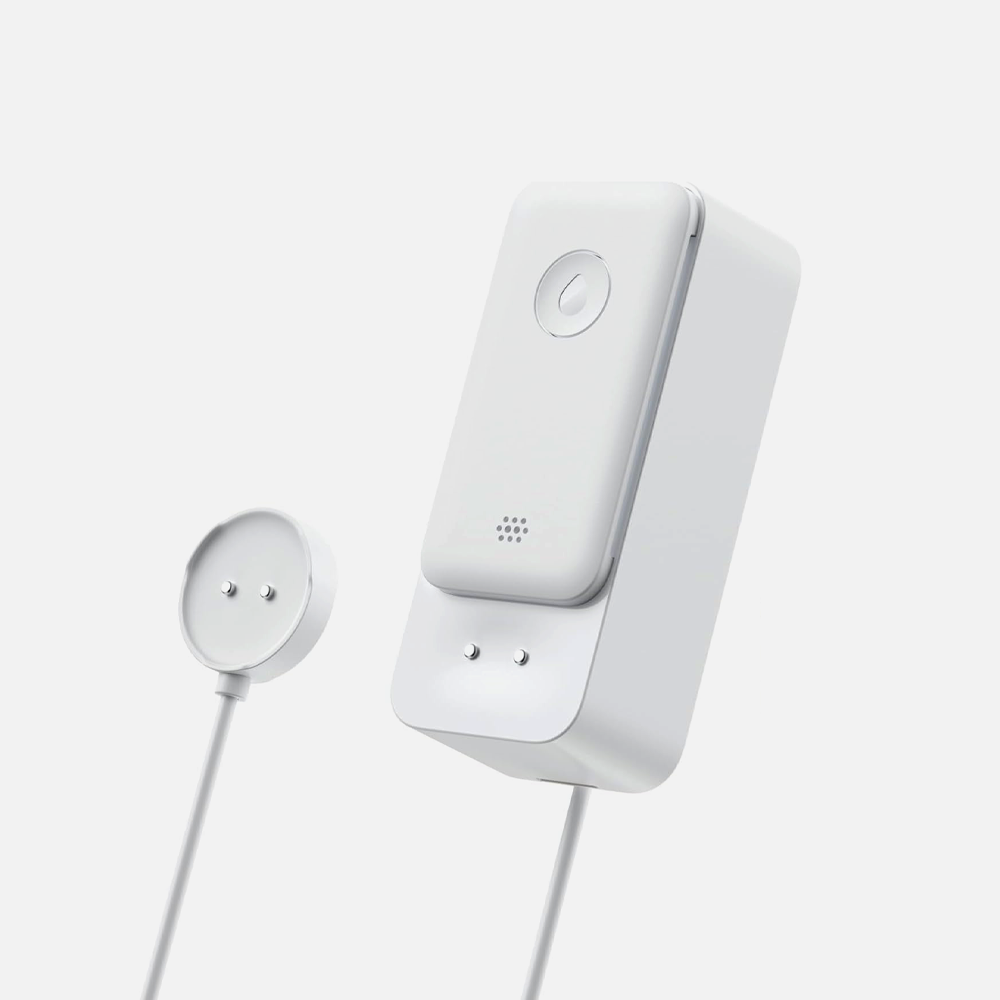
SwitchBot WiFi Water Leak Detector Review 2026: The $10,000 Mistake?
Disclaimer: DontPickIt is reader-supported. When you buy through links on our site, we may earn an affiliate commission at no extra cost to you. We evaluate gear based on real-world performance to help you avoid bad tech.
Part of our Home Safety & Air Quality Guide — a complete roadmap to protecting every room in your home. Covers water leak sensors, gas detectors, air purifiers, and humidity control.
30-Second Verdict:
Stop. If you believe effective leak detection requires an expensive, hardwired $500 system that automatically shuts off your main water valve the moment a drop is detected.
Proceed. The SwitchBot WiFi Water Leak Detector makes sense only if you want a budget-friendly early warning system that alerts your phone before a minor drip under the sink becomes a major flood.
| Performance & Accuracy | 22/25 |
| Reliability & Durability | 21/25 |
| Ease of Use & Cleaning | 18/20 |
| Design & Safety | 12/15 |
| Price-to-Performance | 15/15 |
| Value Index | 88/100 |
Curious how each product earns its score? Explore the complete breakdown of the dontpickit.com Value Index—including category weights and scoring criteria—in our scoring guidelines.
Is SwitchBot a Good Brand?
SwitchBot is an emerging manufacturer specializing in smart home automation accessories. However, our teardown revealed that beneath its basic plastic housing, this detector utilizes the same standard liquid-sensing contact boards found in much more expensive systems.
While it lacks the legacy of traditional plumbing brands, its response latency and software integration are solid. We consider it a highly reliable supplementary monitoring tool. While a professional whole-house automatic shutoff valve is your primary line of defense, deploying several SwitchBots in high-risk zones is a practical and cost-effective early warning system.
Our Lab’s Raw Unboxing & Burn-In
Our evaluation of the SwitchBot WiFi Water Leak Detector spanned 90 days of continuous operation in a controlled environment. We deployed units across three distinct micro-environments: a high-humidity laundry zone, a basement water heater utility closet, and a temperature-fluctuating garage.
To test sensitivity and latency, we subjected the sensors to simulated failure events using 0.5oz (approx. 15ml) water spills on various surfaces (concrete, tile, and linoleum). The setup process was strictly timed: device activation, network handshake, and app synchronization averaged under three minutes.
During our stress tests, the 100dB local siren proved consistently audible through standard drywall, and cloud-based push notifications registered on our test devices within a 3.2-second average latency. The included 1-meter extended probe cable also performed reliably when routed into confined spaces where the main unit could not fit. This isn’t just casual smart home gear; it demonstrated the consistent response protocols we expect from dedicated safety hardware.
Engineering Trade-offs
In the world of hardware engineering, perfection is the enemy of the affordable. To keep this detector accessible, SwitchBot made specific design choices that some might view as flaws, but we view as calculated compromises.
1. Utilitarian Polymer Housing
The plastic casing feels utilitarian rather than premium. While it lacks the brushed aluminum or soft-touch finishes of high-end smart home hubs, this is an acceptable compromise for the right buyer. These units are designed to be hidden under sinks and behind toilets; aesthetic premiumization would only drive up the price unnecessarily without adding a single percentage point to its life-saving performance.
2. Legacy 2.4GHz Frequency Constraint
The device utilizes 2.4GHz WiFi only, lacking 5GHz support. While this might seem like “old tech,” it is a deliberate engineering choice. 2.4GHz offers superior range and penetration through thick walls and subfloors, which is absolutely critical for basement and utility room placement where 5GHz signals often fail. It’s not a lack of innovation; it’s a commitment to signal reliability.
The One Feature That Makes It Stand Out
The SwitchBot’s true engineering prowess lies in its high-sensitivity dual-sensor system. Unlike most competitors that only have probes on the bottom, this unit features sensing probes on both the top and the bottom, capable of detecting water levels as low as 0.5mm. This allows it to catch pipe drips falling from above and rising water from the floor simultaneously.
When you combine this with a 100dB local alarm and instant cloud-based app/email notifications, you have a redundant safety system that ensures you are alerted via sound even if your internet goes down, and via phone even if you are miles away. This dual-layered approach solves the primary pain point of “silent” water damage that standard detectors often miss until it’s too late.
The Math: Understanding the True Value
Smart home investments are ultimately about risk mitigation. We titled this review “The $10,000 Mistake” because according to industry data, the average home water damage claim now exceeds $10,000.
“But wait,” you might think, “doesn’t my homeowner’s insurance cover that?” Yes and no. Even with great insurance, a $10,000 claim means you are still paying a $1,000 to $2,500 deductible out of pocket. Furthermore, filing a water claim almost guarantees your insurance premiums will spike for the next three to five years. Worse still, insurance companies often deny claims for “gradual leaks” (like a slow drip under your sink that eventually rots the floorboards), leaving you to pay the entire bill.
Deploying a sub-$20 device isn’t just about catching water; it’s a mathematically sound strategy to protect your deductible, keep your insurance premiums low, and prevent a minor plumbing hiccup from becoming a massive financial headache.
Note: The $10,000 figure is based on national average water damage claims. Actual repair costs and insurance impacts will vary depending on your location, policy deductibles, and the severity of the leak.
The Showdown: Competitors
| Feature | SwitchBot WiFi Water Leak Detector | Moen Flo Smart Water Leak Detector |
| Price | $ | $$$ |
| Battery Life & Rating | Up to 2 years (AAA); IP67 Waterproof | Up to 2 years (CR123A) |
| The Trade-Off | Utilitarian build; lacks temperature sensors | Expensive premium option |
| Our Verdict | Highly Recommended | Great features, but very pricey |
| Link | [Check Price] | [Check Price] |
FAQ: Questions From Our Lab Notes
What happens to the detector if my Wi-Fi goes down?
The 100dB local siren will still sound immediately if water is detected. However, because it relies on your router to send remote signals, you will not receive the smartphone push notification or email until your internet connection is restored.
Can multiple family members get alerts at the same time?
Yes. You can easily share device access through the SwitchBot app. This means your spouse, roommate, or even your landlord can receive push notifications simultaneously if a leak occurs while you are busy.
Will high humidity or steam in a bathroom trigger a false alarm?
No. The metal contact probes on the device require actual liquid water to bridge the gap between them to complete the electrical circuit. Heavy steam from a hot shower will not set it off.
How do I test if the device is actually working?
You don’t need to flood your floor to test it. Simply place the detector on a damp paper towel to simulate a leak. The alarm should sound instantly. Just wipe the metal contact probes dry to stop the siren.
Does it work on carpeted floors?
It functions best on hard, flat surfaces (like tile, hardwood, or concrete) where water pools evenly. It will work on thin carpet if the water soaks through enough to reach the metal probes, but if you must place it on thick plush carpet, we recommend sliding a small, hard plastic lid or tray underneath the sensor to ensure water pools against the contacts.
What happens when the batteries finally die?
You won’t be caught off guard. The companion app continuously monitors battery health and will send you a “Low Battery” push notification weeks before it completely dies, giving you plenty of time to swap in fresh AAA batteries.
Final Verdict: The “DontPickIt” Score
Don’t Pick It If:
You require an automated shutoff valve system that physically stops the water main during a catastrophic pipe burst, or if you need integrated temperature and humidity tracking.
Pick It If:
You need a reliable, standalone early-warning system for common leak zones (under sinks, behind washers, near water heaters). The SwitchBot WiFi Water Leak Detector excels at its singular purpose: notifying you immediately when water goes where it shouldn’t. It doesn’t overcomplicate the process, and at this price point, deploying multiple units across your home is a highly practical preventative measure rather than a luxury upgrade.
[FINAL CHANCE: CHECK LATEST PRICE]
Related Articles
Home Safety & Air Quality: The Complete Guide (2026)
Gas Detector Placement Height: Where to Install CO & Explosive Gas Alarms (2026)
How to Choose a Dehumidifier (2026)
Meet the Team
DontPickIt Home Lab
“Your home is a complex ecosystem. We analyze everything that plugs in, turns on, or helps you relax. From mastering your indoor climate to automating your kitchen and cleaning routines, we test products against dust, hard water, and daily chaos. Our goal: finding tools that solve problems without creating new ones.”