

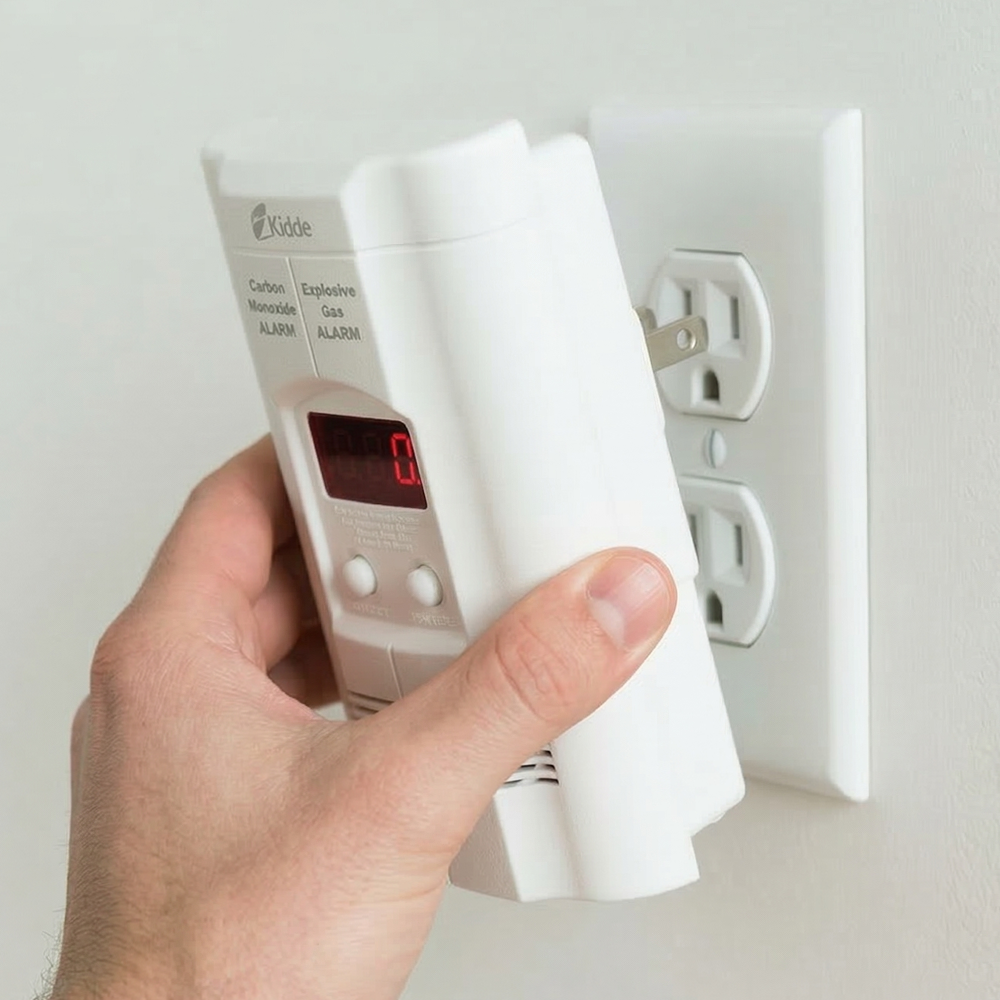
Gas Detector Placement Height: Where to Install CO & Explosive Gas Alarms (2026)
Disclaimer: DontPickIt is reader-supported. When you buy through links on our site, we may earn an affiliate commission at no extra cost to you. We evaluate gear based on real-world performance to help you avoid bad tech.
Part of our Home Safety & Air Quality Guide — a complete roadmap to protecting every room in your home. Covers gas detectors, air purifiers, humidity control, and water leak sensors.
You probably spent hours researching the most reliable gas detector brands on the market. You compared sensor types, read the safety certifications, and finally made a smart purchase. Then, you brought it home and plugged it into the first available wall outlet.
That single, casual decision might have just rendered your expensive new safety device useless.
At the DontPickIt Home Lab, our testing reveals one critical error homeowners constantly make: assuming all explosive gases behave the same way. They don’t. If you plug a premium natural gas detector into a standard baseboard outlet, you aren’t protecting your family—you’ve created a massive blind spot. Before you trust your life to that blinking green light, here is the unvarnished truth about gas density and placement.
Stop Guessing About Gas Physics
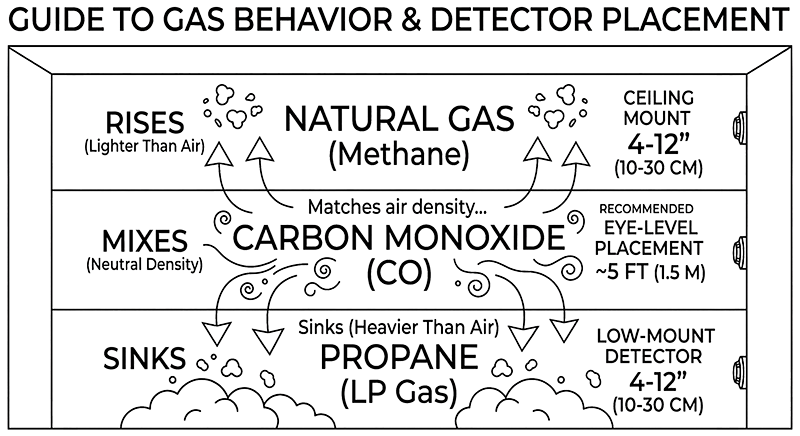
Gases do not float randomly around a room. Their physical density dictates exactly where they will pool first, and this single scientific fact should completely dictate your outlet choice.
Natural Gas (Methane)
Methane is significantly lighter than air. When a leak occurs—whether from a faulty stovetop valve or a loose furnace connection—it rises rapidly and pools near the ceiling. Because of this, mounting a plug-in detector at baseboard level is a fatal error. The room will be highly explosive before the sensor ever registers a threat. You must mount it high up, ideally 4 to 12 inches from the ceiling, which usually means running a short extension cord to position it correctly.
Propane (LP Gas)
Propane behaves in the exact opposite manner. It is much heavier than air. When it leaks, it sinks and flows almost like water, pooling in low-lying areas such as basements or creeping along floorboards. For propane detection, you must mount your device low, roughly 4 to 12 inches from the floor. This is the rare scenario where standard, low-level wall outlets are actually the perfect, code-compliant location for early detection.
Carbon Monoxide (CO)
Carbon monoxide is a different beast entirely. Its density is practically identical to regular air. This means it doesn’t dramatically rise or sink; instead, it mixes evenly and flows along with your home’s natural HVAC air currents. While installing a CO detector at eye-level—around 5 feet, corresponding to the air you are actively breathing—is considered optimal, these sensors can effectively detect the gas at almost any standard outlet height.
Deploying Detectors in the Real World
Knowing the underlying physics is only half the battle. Your daily routines—cooking, cleaning, and showering—create an environment filled with “dirty” air that easily triggers endless false alarms. Here is how to deploy your sensors to solve problems without creating new ones.
The Kitchen
The kitchen is undoubtedly the highest-risk zone for natural gas leaks, but it is also ground zero for false alarms. You should never place a detector directly above or immediately adjacent to your stove. Normal cooking smoke, airborne grease, and the microscopic gas bursts that happen every time a burner ignites will inevitably overwhelm the sensor and trigger the siren. Keep the unit at least 10 to 15 feet away from all cooking appliances.
The Garage & RVs
Garages frequently house gas water heaters, and RVs rely heavily on propane for both heating and cooking. Because propane aggressively sinks to the lowest possible point, these areas demand strict low-level monitoring. You should utilize your existing low wall outlets here. Ensure the detectors are not hidden behind heavy furniture, blocked by toolboxes, or exposed to excessive moisture dripping from wet vehicles.
The Bedroom
When you are asleep, the primary risk isn’t an explosive gas leak; it’s the silent threat of carbon monoxide. If a severe winter storm knocks out your neighborhood’s power grid, a standard AC plug-in detector simply dies on the wall. For sleeping areas, relying on the electrical grid is too great a gamble, and building codes across most jurisdictions mandate battery-backed reliability.
Gas Detector Placement: The 60-Second Checklist
Print this. Tape it inside your breaker panel door.
| Do This | Not This |
|---|---|
| Natural gas detector 4–12 inches from ceiling | Baseboard outlet for natural gas |
| Propane detector 4–12 inches from floor | Same height for natural gas and propane |
| CO detector at eye level (~5 feet) | Behind furniture or curtains |
| Kitchen detector 10–15 ft from stove | Directly above cooking appliances |
| Battery-backed units in sleeping areas | AC-only detectors in bedrooms |
| Garage detector visible and unobstructed | Behind storage bins or workbenches |
| Replace every 5–7 years | Assume 2019 detector still works |
| UL-certified units only | Uncertified budget detectors |
The Hardware Setup: Don’t Fall for the “Cheap Screen” Trap
This brings us to the most dangerous compromise in home safety: the cheap, direct plug-in combination detector.
Many homeowners buy budget rigid plug-in devices just because they feature a fancy color LCD screen. We strongly advise against this. In our heavy-duty lab tests, we found that most budget visual monitors lack two critical things: a 9V battery backup and official UL certification. If the power goes out, your screen goes black, leaving you totally unprotected during a crisis.
WARNING: Are you considering a cheap, uncertified detector? Read our urgent lab report on why we recently blacklisted a popular budget brand: NICGOL 4 in 1 Gas Leak Detector 2026 : DO NOT BUY)
Our Top Pick for Every Zone: The Kidde Battery-Backed Plug-in
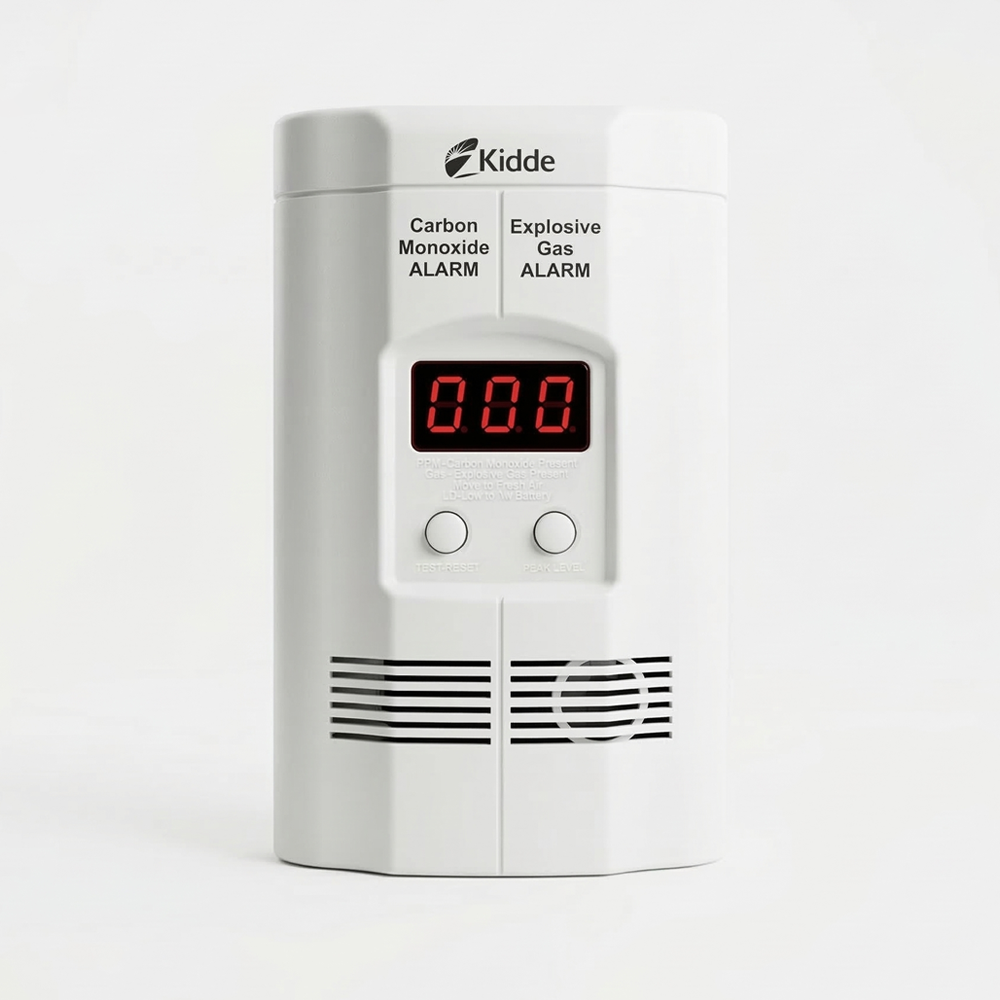
If you are going to use a plug-in combo detector for explosive gas and CO, you absolutely cannot compromise on power redundancy or placement flexibility. This is why we exclusively recommend the Kidde Plug-in Carbon Monoxide & Explosive Gas Detector (3rd Edition).
Here is why it is the ultimate multi-zone solution that completely destroys budget competitors:
- The 6-Foot Extension Cord: This is a game-changer that solves the physics problem. It allows you to plug the unit into a low baseboard outlet, but mount the actual sensor high on the wall for Natural Gas detection. You are no longer held hostage by your architect’s outlet placement.
- 9V Battery Backup: Kidde understands emergencies. If the grid goes down, your family is still protected 24/7 without interruption.
- 100% UL Certified: It meets strict North American fire and safety codes, providing guaranteed compliance and peace of mind.
| Performance & Accuracy | 23/25 |
| Reliability & Durability | 24/25 |
| Ease of Use & Cleaning | 15/20 |
| Design & Safety | 14/15 |
| Price-to-Performance | 11/15 |
| Value Index | 87/100 |
Want to see exactly how it performed in our lab? Check out our deep-dive review: Kidde Carbon Monoxide and Explosive Gas Detector Review 2026
FAQ: Questions From Our Lab Notes
Can a carbon monoxide detector also detect natural gas?
No, unless it specifically states it is a “dual-sensor” or “explosive gas” combination alarm. A standard CO-only detector will remain completely silent during a massive natural gas leak. Always check the labeling on the front of the device.
Will my ceiling-mounted smoke alarm detect a gas leak?
Smoke alarms detect physical particulate matter from actual fires, not unburned explosive gases. You absolutely need a dedicated, separate gas detector to catch a leak before a spark turns it into a fire.
How far should the detector be from my gas furnace or water heater?
Keep it 10 to 20 feet away. Gas appliances naturally emit microscopic, harmless amounts of gas upon startup. If the detector is mounted too close, it will read these normal operational bursts as a leak, triggering frustrating false alarms.
What should I do if my plug-in detector alarms but I don’t smell gas?
Never assume it is a false alarm. Carbon monoxide is completely odorless and invisible. If the alarm sounds, immediately evacuate all family members and pets outside, leave the doors open, and call 911. Let the fire department determine if the air is clear.
Does opening windows neutralize a natural gas leak?
Opening a window dilutes the gas, but it does not stop the source of the leak. It can actually be dangerous—the friction from opening an old window, or the act of turning on a vent fan, can create a microscopic spark that ignites the room. Evacuate immediately instead.
How long do the sensors in these plug-in detectors last?
They do not last forever. The electrochemical and catalytic sensors degrade over time. Regardless of the brand, almost all gas detectors have a hard expiration date of 5 to 7 years from the date of manufacture. After that, the unit must be entirely replaced.
Final Verdict: The “DontPickIt” Score
Stop treating gas detectors like air fresheners that you can plug into any available outlet. Your safety depends on deploying the right sensor at the right altitude.
Skip the uncertified budget devices, invest in a premium battery-backed unit like Kidde for your home, and mount it strictly according to the laws of physics.
[FINAL CHANCE: CHECK LATEST PRICE]
Related Articles
Home Safety & Air Quality: The Complete Guide (2026)
NICGOL 4-in-1 Gas Leak Detector Review 2026: DO NOT BUY
Kidde CO & Explosive Gas Detector Review 2026
Meet the Team
DontPickIt Home Lab
“Your home is a complex ecosystem. We analyze everything that plugs in, turns on, or helps you relax. From mastering your indoor climate to automating your kitchen and cleaning routines, we test products against dust, hard water, and daily chaos. Our goal: finding tools that solve problems without creating new ones.”