

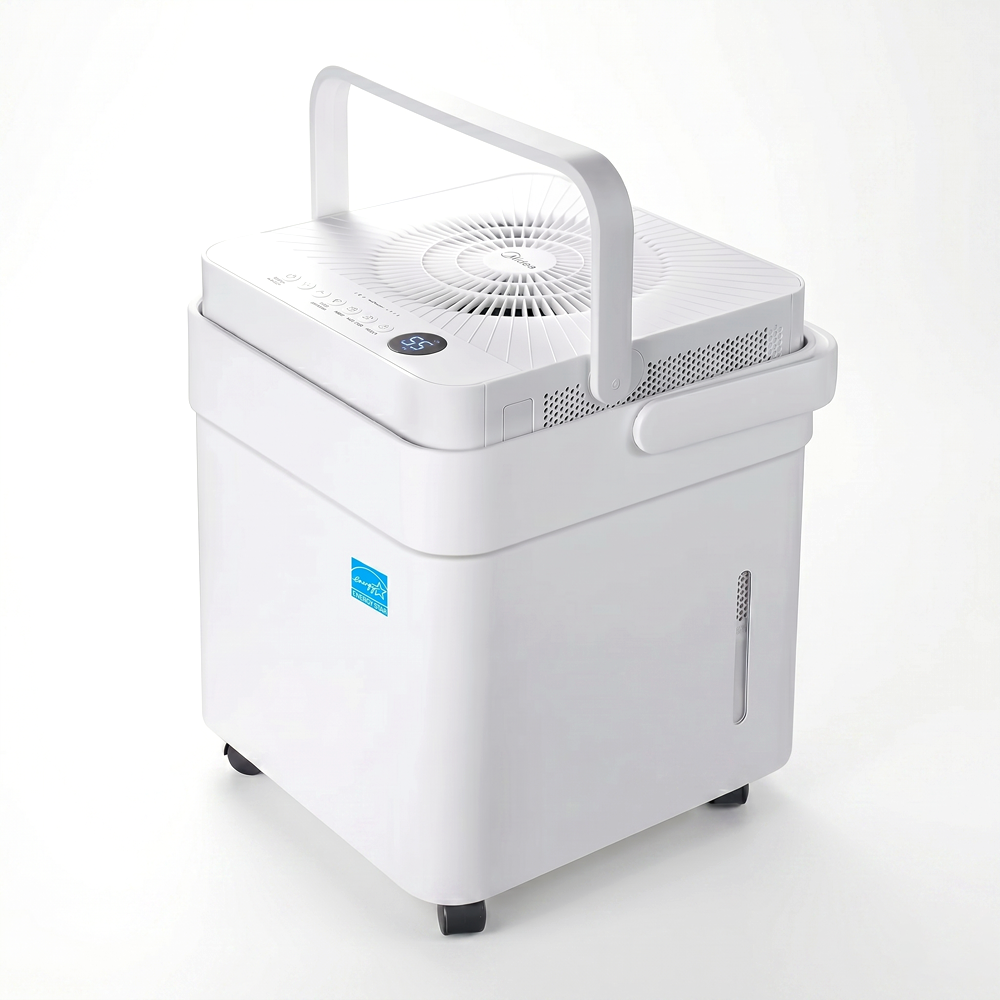
How to Choose a Dehumidifier (2026): Stop Mold, Moisture & Marketing Hype
Disclaimer: DontPickIt is reader-supported. When you buy through links on our site, we may earn an affiliate commission at no extra cost to you. We evaluate gear based on real-world performance to help you avoid bad tech.
Part of our Home Safety & Air Quality Guide — a complete roadmap to protecting every room in your home. Covers dehumidifiers, air purifiers, humidifiers, and more.
If you are reading this, you likely have a moisture problem that is making you anxious. Maybe it’s the sticky, heavy humidity in the air, visible condensation on your windows, or perhaps you are urgently looking for a dehumidifier for water damage after a leak or flood.
You know you need a machine, but the options are overwhelming. You are right to be cautious. Buying the wrong machine means wasting electricity, dealing with constant noise, and still having a damp home.
As engineers, we don’t look at marketing hype; we look at physics. A dehumidifier is not magic; it is a simple machine designed to battle thermodynamics and gravity. This guide will break down exactly how they work and help you choose the right engineering solution for your specific space.
Note: If you are still confused about whether you need a dehumidifier, humidifier, or air purifier, start with our Humidifier vs Dehumidifier vs Air Purifier — How to Choose the Right One
How It Actually Works: The “Soda Can” Effect
To understand why this machine works, forget complex diagrams. Just think about a cold can of soda on a hot summer day.
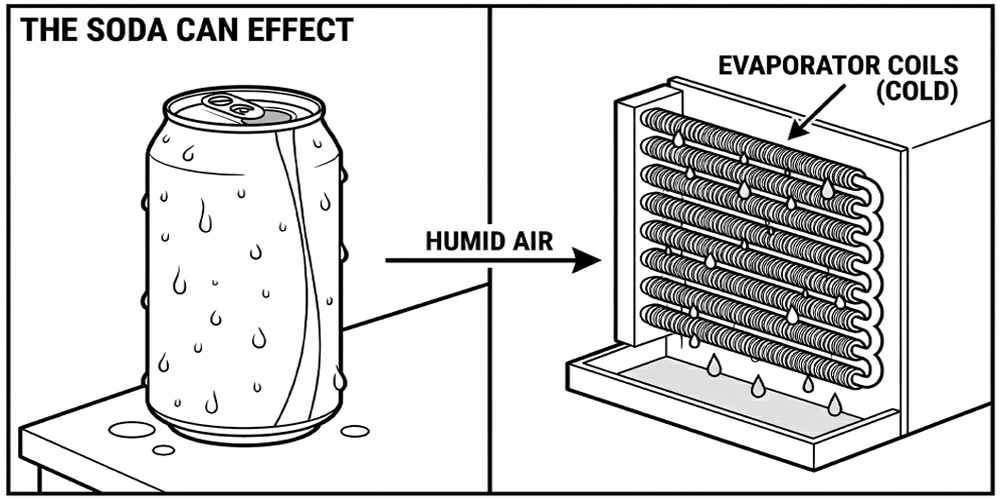
What happens to that can? Water droplets form on the outside. Why? Because the cold surface pulls moisture out of the warm air. A dehumidifier is just a giant, electrically cooled soda can inside a box. The technical term for this is a refrigerant dehumidifier. It is essentially a small air conditioner that blows the hot exhaust air back into the room instead of outside.
The “Sweaty Soda Can” Cycle
Instead of magic, the machine uses a simple thermodynamic loop:
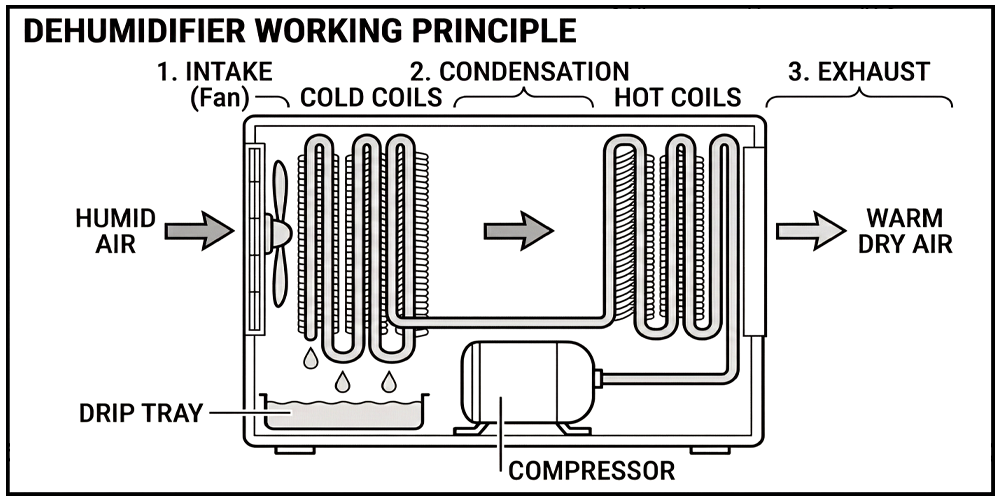
Step 1: The Trap (Inhale)
A fan sucks your humid room air into the machine.
Step 2: The Squeeze (Water Removal)
The air hits a set of freezing cold coils. Just like the soda can, the water in the air instantly turns from gas to liquid droplets and drips into the collection bucket.
Step 3: The Reheat (Why it blows warm air)
The now-dry air passes over a set of hot coils to warm up before being blown back into your room.
The “Side Effect”: Why is my Dehumidifier Blowing Warm Air?
A very common search query we see is: “Why is my dehumidifier blowing warm air?”. This is not a malfunction; it is physics. There are two reasons:
Relative Humidity Physics: Warm air is “thirstier” than cold air. By warming the dry air before shooting it back out, it lowers the Relative Humidity (RH) of your room much faster than cold air would.
Energy Conservation: The heat isn’t added by a heater; it is “recycled” heat from the compressor working hard. Instead of wasting it, the machine uses it to dry the air further.
The Reality: Expect your room to get 3°C to 5°C warmer. While this is annoying in a hot apartment, it is perfect for cool basements or for dehumidifying a garage in winter or spring.
How It Actually Works
It sucks in your moist room air and passes it over freezing cold coils. The water in the air condenses (turns from gas to liquid) and drips into a bucket. But here is the catch: Conservation of Energy. To freeze those coils, a compressor has to work hard, generating heat. Plus, when water turns from gas to liquid, it releases “latent heat.”
Engineering Warning: The “Dry Sauna” Effect Since a dehumidifier blows that hot exhaust air back into your room, it can raise the temperature by 3°C to 5°C (especially in a closed, small room).
The Mistake: Buying this for a hot, humid apartment in July without AC. You will fix the sweat, but you will bake in the heat.
The Fix: Only use huge dehumidifiers in cool basements or in winter. For summer? Your AC is already a giant dehumidifier. Use that instead.
What Size Dehumidifier Do I Need?
This is the most confusing part for buyers. Marketing boxes say “Covers 4,500 Sq. Ft!”, but these numbers are often misleading lab results. In the real world, you need to size based on Moisture Severity, not just room dimensions.
Understanding “Pints Per Day” (PPD)
The only metric that matters is PPD (Pints Per Day).
35-Pint Class: Good for individual damp rooms or small apartments.
50-Pint Class: The gold standard for most basements, large open spaces, and wet garages.
The Engineer’s Sizing Rule
Don’t just measure the room size; assess the severity of moisture.
Moderately Damp (Musty Smell):
Recommendation: 35-50 Pint Unit.
Why: A larger unit is “overkill” here, which is good. It will run for 30 minutes, dry the air, and then turn off. This is crucial if you are worried about the cost to run a dehumidifier. A larger machine coasting at 50% capacity is more energy-efficient and quieter than a small machine sprinting at 100% capacity.
Very Damp & Wet (Visible Water/Puddles):
Recommendation: 50 Pint Unit (Mandatory).
Why: Here, the machine isn’t coasting; it’s fighting for survival. A smaller unit would run 24/7 and never catch up. The 50-pint unit has the power to actually win the battle against active moisture infiltration.
The Drainage Battle: Fighting Gravity
This feature determines if you love your machine or hate it. The Physics: Water is heavy (1kg per liter). Basements are usually the lowest point in the house. Getting the water out is the hardest part.
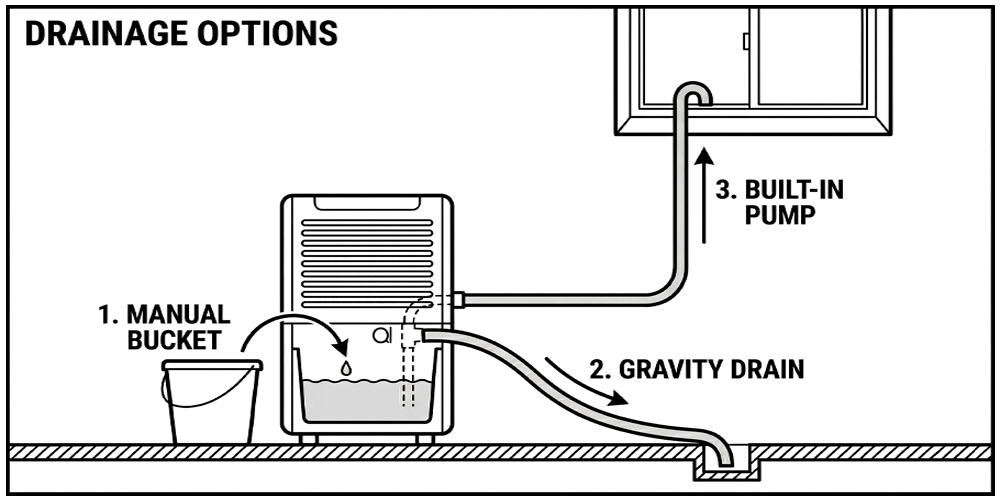
The Manual Bucket (High Maintenance)
If you rely on the bucket, be prepared to carry a heavy 10-15 lb bucket upstairs twice a day. If you forget, the machine stops, and humidity spikes immediately. This is the #1 reason people stop using their dehumidifiers.
The Gravity Drain (Passive)
You attach a hose, and water trickles out. This only works if you have a floor drain that is lower than the machine.
The Built-in Pump (The Engineering Solution)
For basements without floor drains, the best solution is a 50 pint dehumidifier with pump. An internal pump pushes water up a tube and out a basement window or into a utility sink. It is the only “set it and forget it” way to fight gravity.
Special Scenario: The Cold Basement Problem
If you are placing your unit in an unheated basement, crawlspace, or garage where temperatures drop below 18°C (65°F), you face a specific engineering challenge.
In these cool conditions, the internal coils get so cold that the condensation doesn’t just drip—it turns into a solid block of ice. Once the coils ice over, the machine stops pulling water from the air and just wastes electricity.
This is why you often see people searching for “dehumidifier freezing up”. To avoid this, you must ensure your unit has a robust Auto-Defrost system. This sensor detects ice buildup and temporarily reverses the cycle or runs the fan to melt the ice, ensuring continuous operation even in chilly environments.
The Engineer’s Top Recommendations
Based on performance, drainage options, and value, here are the top 3 configurations.
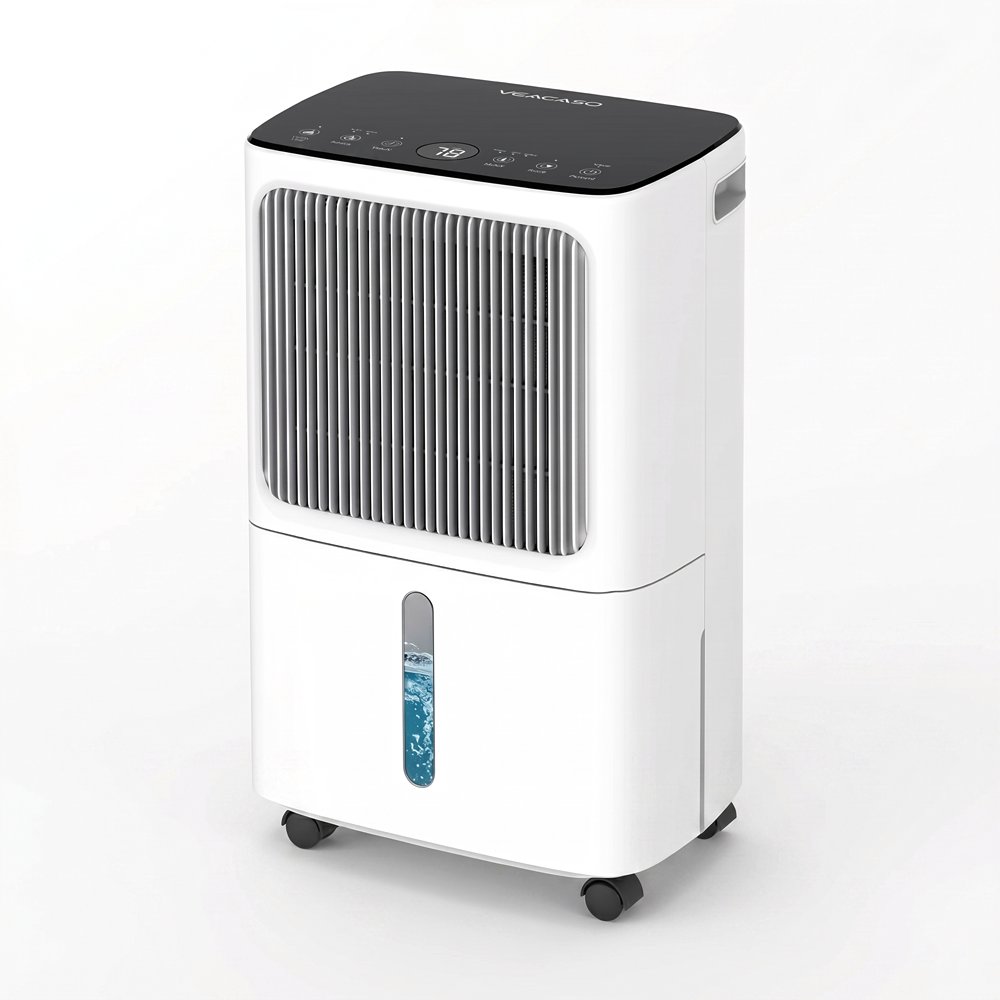
VEAGASO 2500 Sq. Ft Dehumidifier (Best Value for Most Homes)
If you want a machine that balances power, ease of use, and price, this is the engineer’s pick. (Check Price on Amazon)
| Performance & Accuracy | 22/25 |
| Reliability & Durability | 21/25 |
| Ease of Use & Cleaning | 17/20 |
| Design & Safety | 13/15 |
| Price-to-Performance | 15/15 |
| Value Index | 88/100 |
Why we picked it: It hits the “Goldilocks” zone. It’s powerful enough (2500 sq. ft. coverage) for large basements but compact enough for bedrooms. It features intelligent humidity control—you set the target % (e.g., 50%), and it manages the rest.
The Drainage: It comes with a drain hose for continuous gravity drainage (great if you have a floor drain) and a 0.66-gallon bucket for manual use.
Verdict: The sensible choice for 90% of households dealing with typical dampness.
Midea Cube 50-Pint Dehumidifier with Pump (Best for Basements without Drains)
If your basement has no floor drain, the VEAGASO (above) requires you to empty the bucket manually. If you want to automate that, you need a pump. (Check Price on Amazon)
| Performance & Accuracy | 22/25 |
| Reliability & Durability | 22/25 |
| Ease of Use & Cleaning | 16/20 |
| Design & Safety | 13/15 |
| Price-to-Performance | 13/15 |
| Value Index | 86/100 |
Why we picked it: This unit features a built-in pump that can push water upwards out of a basement window or into a sink. Plus, its unique nesting design expands to hold 3x more water than standard units.
Verdict: Buy this if you are willing to pay extra to never carry a water bucket again.
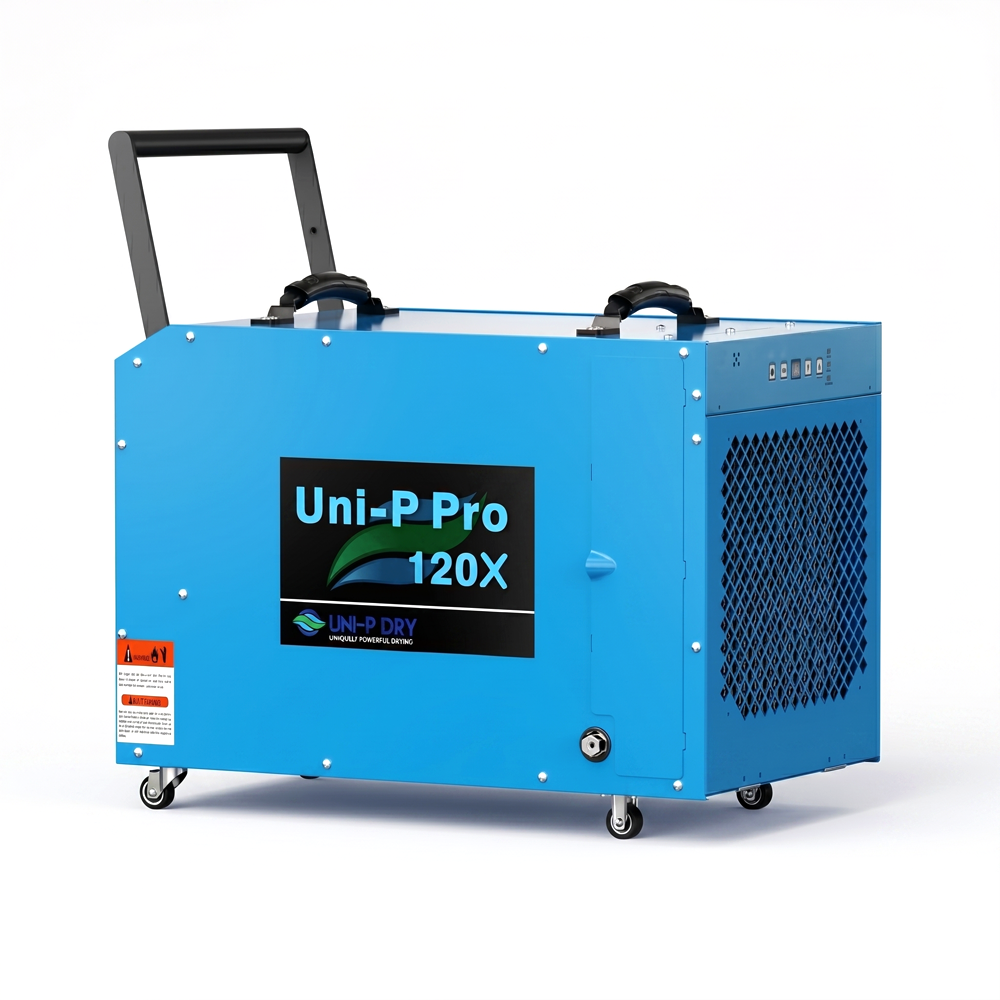
AlorAir Commercial Dehumidifier with Built-in Pump (Best for Crawl Spaces, Restoration & Harsh Environments)
Do you need crawl space dehumidifier installation? Or are you dealing with severe water damage scenarios? Plastic residential units won’t cut it here. (Check Price on Amazon)
| Performance & Accuracy | 25/25 |
| Reliability & Durability | 25/25 |
| Ease of Use & Cleaning | 13/20 |
| Design & Safety | 12/15 |
| Price-to-Performance | 12/15 |
| Value Index | 87/100 |
Why we picked it: This unit is built like a tank with a metal housing and is designed to operate efficiently in very low temperatures where standard units freeze up. Crucially, it includes a heavy-duty built-in condensate pump. This allows it to automatically push water up and out of tight crawlspaces or basements where gravity draining isn’t possible.
The Verdict: Which One Should You Buy?
Choosing a dehumidifier isn’t about picking a brand; it’s about picking your battle strategy against water.
Scenario A: You have a standard basement with a floor drain nearby.
Get the VEAGASO (34 Pint). It’s efficient, powerful enough for 2500 sq. ft., and saves you money on features you don’t need (like a pump).
Scenario B: You have no floor drain and hate carrying buckets.
Invest in the Midea Cube with Pump. The extra cost buys you freedom from gravity.
Scenario C: You are dealing with a harsh crawlspace or water restoration.
Get the AlorAir Commercial Unit with Pump. It withstands the cold and abuse that would kill a plastic machine, and the pump handles drainage automatically.
FAQ
Can I use a dehumidifier to cool my room in the summer?
No. As explained in the thermodynamics section, a dehumidifier actually generates heat. While it makes the air feel less “sticky” (which helps sweat evaporate), the actual room temperature will rise. For cooling, you need an Air Conditioner.
What is the ideal humidity setting?
We recommend setting it between 45% and 50%. Going below 35% is a waste of electricity and can make the air uncomfortably dry. Going above 55% risks mold growth.
How much does it cost to run a dehumidifier?
It depends on your local electricity rate, but a standard 50-pint unit consumes about 500-700 watts. To save money, buy a larger unit with a humidistat. It will dry the room quickly and shut off, whereas a smaller unit might run 24/7 trying to catch up, costing you more in the long run.
Where is the best place to put a dehumidifier?
Airflow is king. Do not hide it in a corner or push it against a wall. The machine needs to pull air in and blow it out. Place it at least 6-12 inches away from walls and furniture. Ideally, place it centrally in the dampest room (like the basement) with doors open to allow circulation.
My dehumidifier runs but collects no water. Why?
If the humidity is high but the bucket is empty, check three things: 1) Is the filter clogged with dust? 2) Is the humidity setting too high (e.g., set to 70% when the room is 60%)? 3) Is it frozen? If the room is cool, the coils might be iced over.
Related Articles
Home Safety & Air Quality: The Complete Guide (2026)
Humidifier vs Dehumidifier vs Air Purifier (2026)
Ultrasonic vs Evaporative Humidifiers Guide (2026)
Meet the Team
DontPickIt Home Lab
“Your home is a complex ecosystem. We analyze everything that plugs in, turns on, or helps you relax. From mastering your indoor climate to automating your kitchen and cleaning routines, we test products against dust, hard water, and daily chaos. Our goal: finding tools that solve problems without creating new ones.”