

Best Air Purifier for Allergies, Mold & VOCs: 3 Tested (2026)
Disclaimer: DontPickIt is reader-supported. When you buy through links on our site, we may earn an affiliate commission at no extra cost to you. We evaluate gear based on real-world performance to help you avoid bad tech.
Part of our Home Safety & Air Quality Guide — a complete roadmap to protecting every room in your home. Covers air purifiers, gas detectors, humidity control, and water leak sensors.
You might be searching for the best air purifier for allergies because your current strategy isn’t working, or perhaps you are planning your first purchase and feel overwhelmed by technical jargon. Let’s be honest: The air purifier market is a minefield. Manufacturers love to slap “99% efficiency” stickers on boxes, but they often hide the engineering reality. If you don’t understand the underlying physics, you are likely to end up with a “placebo machine”—a noisy plastic box that moves air but doesn’t actually clean it. This guide is your shortcut. We’re stripping away the flashy features to show you the only engineering variables that actually matter for your health.
The “Sealed Box” Rule: Why Airflow Matters
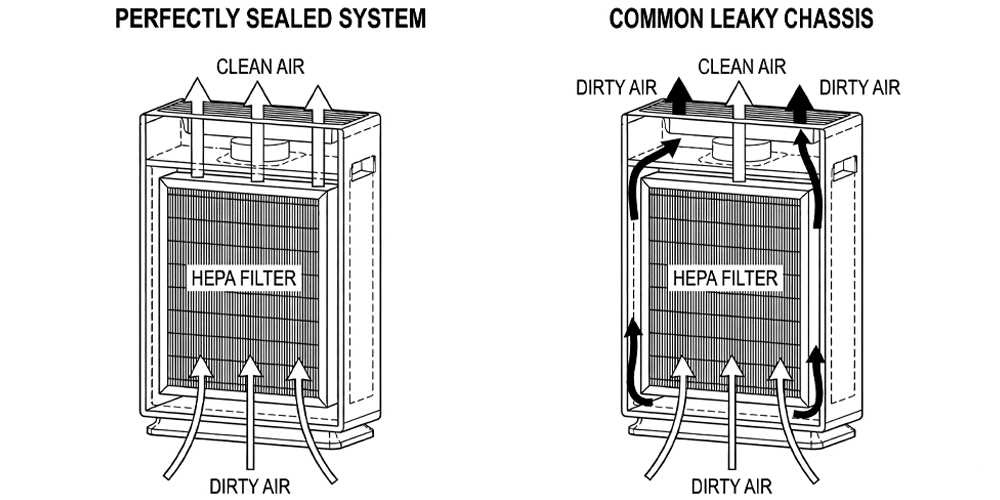
In engineering terms, an air purifier is a pressure vessel that uses a motor to force air through a dense filter. Because air always follows the path of least resistance, any flaw in the machine’s internal path means the air will bypass the filter entirely. Without perfect control over this airflow, a purifier isn’t cleaning your air; it’s simply stirring it.
Why the Seal Outranks the Filter Grade
Most consumers obsess over the HEPA H13 filter grade, but the seal of the chassis is actually more critical. If an air purifier has even a tiny gap in its plastic housing, dirty air will bypass the filter entirely. It leaks through the cracks and blows right back into the room, rendering the “H13” grade useless. This is why a properly sealed unit often outperforms a leaky “premium” machine. It’s like buying a submarine with a screen door—the thickness of the hull doesn’t matter if the water can find an easier way in.
Calculating Your True Clean Air Delivery (CADR)
Once you have a sealed machine, you need to understand power, specifically the CADR rating meaning (Clean Air Delivery Rate). CADR is not just about fan speed; it is a precise calculation of airflow volume multiplied by filtration efficiency. Without a high CADR, your machine cannot cycle the air fast enough to keep up with the constant influx of dust and allergens. You must also avoid marketing traps like “HEPA-type” filters; only True HEPA provides the physical interception necessary to trap 99.97% of microscopic particles.
Protecting Your Lungs from the Ozone Health Trap
While discussing mechanisms, we must address a health trap often disguised as “advanced technology”: The Air Ionizer. Some brands try to cheat the physics test by using electronic “ionizers” to clump particles together. While they claim to “freshen” the air, the high-voltage ionization process creates Ozone (O3) as a byproduct. Ozone is a known lung irritant that can worsen asthma—the exact opposite of what you want from a health device.
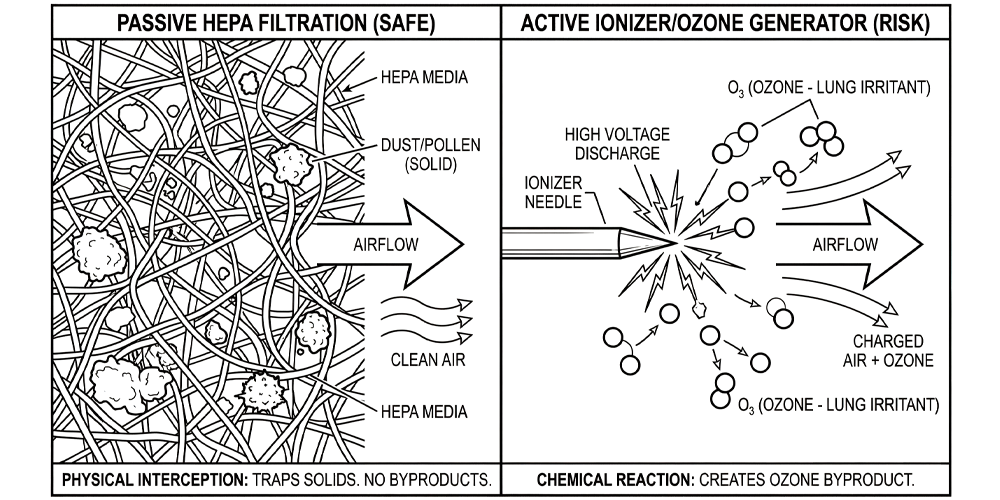
To protect your family, you must strictly ensure you are buying an ozone free air purifier. When weighing the air ionizer vs air purifier debate, always remember that safe air cleaning is a passive process of filtering, never an active chemical reaction. If a machine produces a “fresh” rain-like smell, it is likely producing ozone, and from an engineering standpoint, that means it is polluting your lungs while claiming to clean your room.
The “Carbon Myth”: Why HEPA Can’t Stop Smells
There is a major misconception that HEPA filters remove odors. They do not. You need to visualize two different tools: HEPA is like a net that catches solids like dust and pollen, while carbon is like a sponge that absorbs gases like smoke and chemicals. If you are dealing with odors, you are entering the world of adsorption physics. Most budget machines claim to be the best air purifier for vocs, but if you were to open them up, you would likely see a thin, black mesh sheet. That is essentially a toy; real protection requires pounds of pelletized carbon.
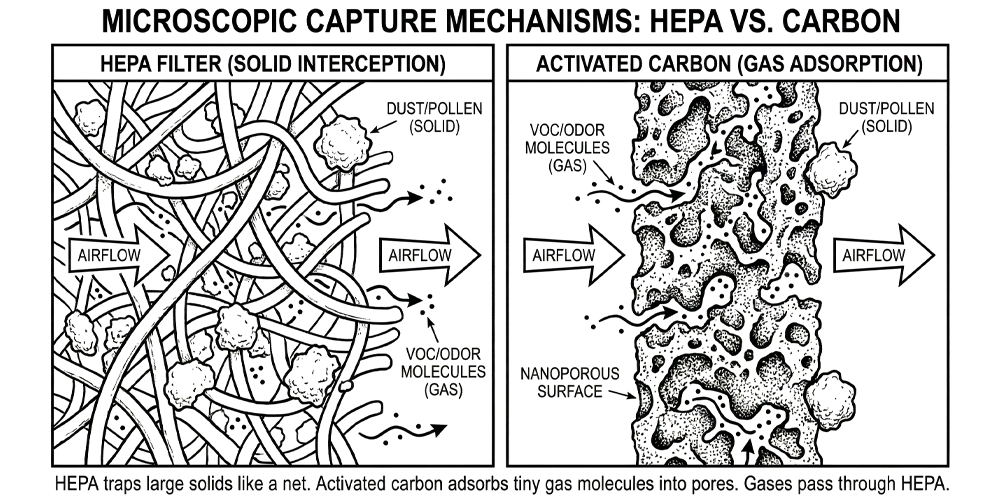
This distinction is critical during The Renovation Nightmare. If you have just painted a room, it is off-gassing Volatile Organic Compounds (VOCs). If you buy a standard unit as an air purifier for paint smell, that thin carbon sheet will saturate in 48 hours. You need a heavy-duty unit with a deep carbon bed to handle the load. The same logic applies to smoke control. Whether it’s kitchen grease or you need an air purifier for weed smoke, smoke is a complex mix of tar and gas. You need a dual-attack system: a pre-filter to catch sticky grease and heavy carbon to soak up the molecules.
The Truth About Humidity, Mold, and Dehumidifiers
We must clear up the confusion between “cleaning air” and “drying air.” We often see the query: is an air purifier the same as a dehumidifier? The answer is a strict No. Air purifiers remove solids, while dehumidifiers remove water vapor. If your room feels damp or swampy, an air purifier cannot help you because there is a fundamental difference between air purifier and dehumidifier functions.
The “Mold Defense” Strategy
Can an air purifier help with mold? Yes, by catching the airborne spores before you inhale them, but it cannot kill the mold colony growing on a damp wall. For total victory, you need a combined strategy: use a dehumidifier to starve the mold of moisture, and an air purifier to scrub the spores it releases into the air. If you want to dive deeper into how these two machines fight different battles, check our full technical breakdown: Humidifier vs Dehumidifier vs Air Purifier
The Candle Myth
People also frequently ask about natural remedies, such as “Do beeswax candles purify the air?” Unfortunately, the answer is No. Burning anything adds soot and fine particles to your room. There is no magic candle that deletes dust; only a properly sized mechanical filter can do that.
The 3-Step Formula to Audit Any Air Purifier
You’ve learned the physics of Sealing, Ozone, and Carbon. Now, follow this 3-step audit to pick the right machine for your home.
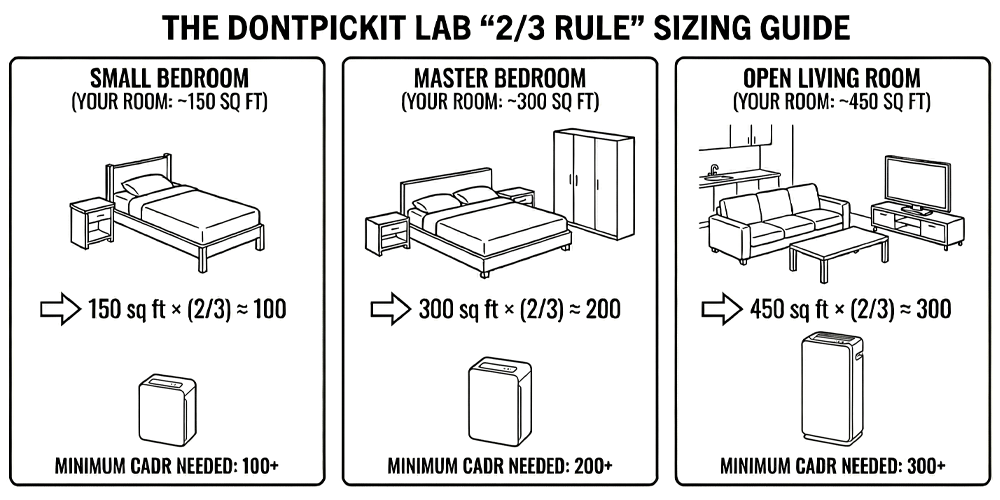
Step 1: The Size Check (The 2/3 Rule) Ignore the room size on the box. Instead, find the CADR number. To clean your air effectively every 12 minutes, the CADR should be roughly two-thirds of your room’s square footage. For a 150 sq ft bedroom, you need a CADR of 100+; for a 450 sq ft living room, you need 300+.
| Room Type | Room Size (Approx) | Minimum CADR You Need |
| Small Bedroom | 100 – 150 sq ft | CADR 100+ |
| Master Bedroom | 200 – 300 sq ft | CADR 200+ |
| Living Room | 400 – 500 sq ft | CADR 300+ |
Step 2: The Physical Audit Verify the machine’s build quality by examining the user manual or technical specs. First, look for a “fully sealed chassis” or “rubber gaskets” on the filter—these are essential engineering features to prevent air bypass. Second, evaluate the carbon stage. For weed smoke or chemical VOCs, ensure the filter utilizes actual pelletized carbon. Avoid units that rely on a thin, see-through carbon cloth, as they lack the surface area required for true odor adsorption.
Step 3: The Safety Verify Search the model and the word “Ozone.” If the machine has an ionizer that cannot be manually turned off, walk away. Always prioritize a certified ozone free air purifier to avoid long-term lung irritation.
The Engineer’s Top Picks
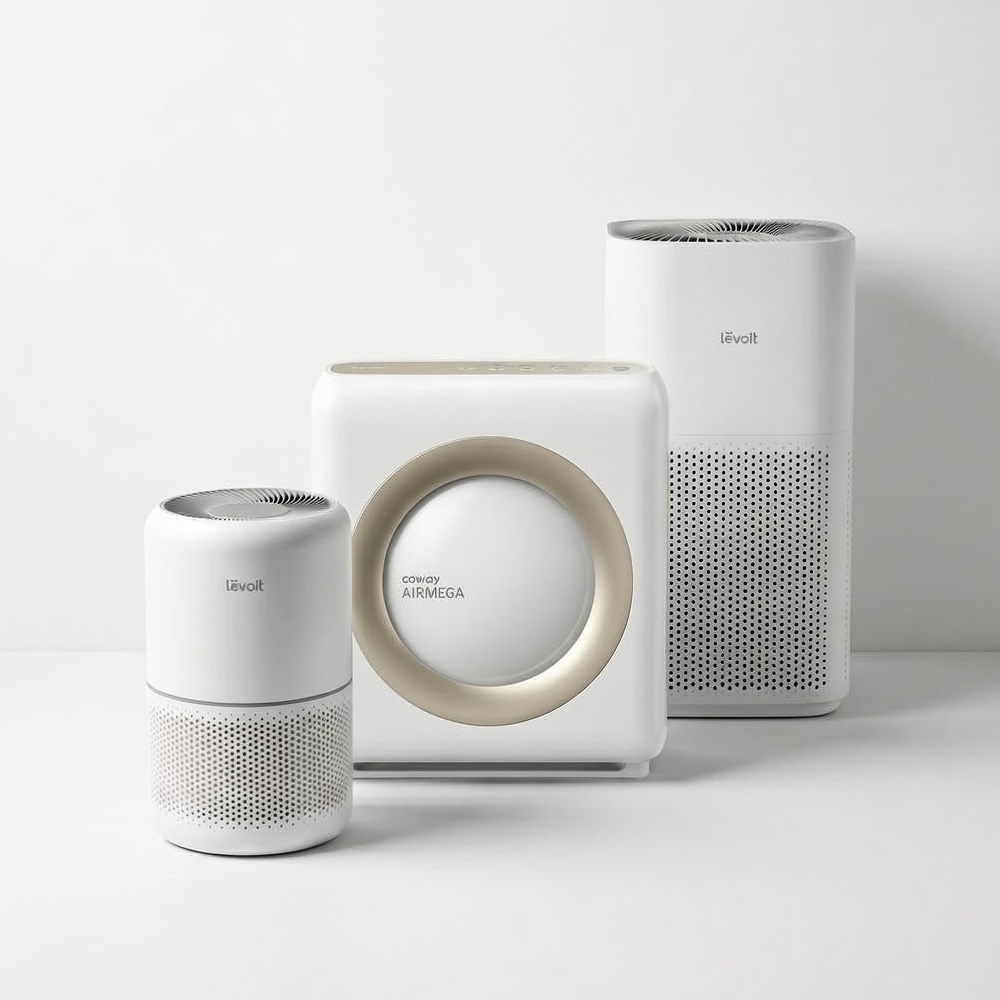
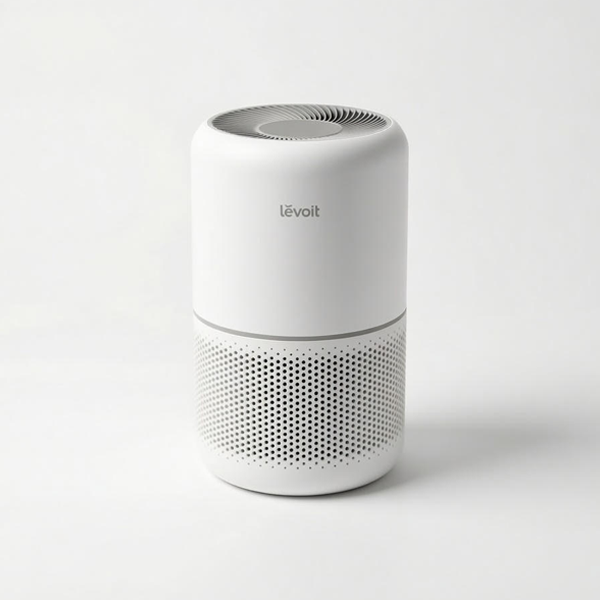
The “Compact Reliable” Pick: Levoit Core 300
The most popular small-room unit for a reason. It looks minimalist, but its vortex engineering works.
| Performance & Accuracy | 21/25 |
| Reliability & Durability | 23/25 |
| Ease of Use & Cleaning | 19/20 |
| Design & Safety | 13/15 |
| Price-to-Performance | 14/15 |
| Value Index | 90/100 |
The Lab Verdict: It is strictly ozone-free with a high-efficiency vortex intake. It excels at capturing pet dander in spaces up to 219 sq ft.
The Trade-off: The “Sleep Mode” is whisper quiet but moves almost no air. If you have serious allergies, keep it on Speed 1 or 2 at night, even if it hums a little.
Read our full 6-month Levoit Core 300 review
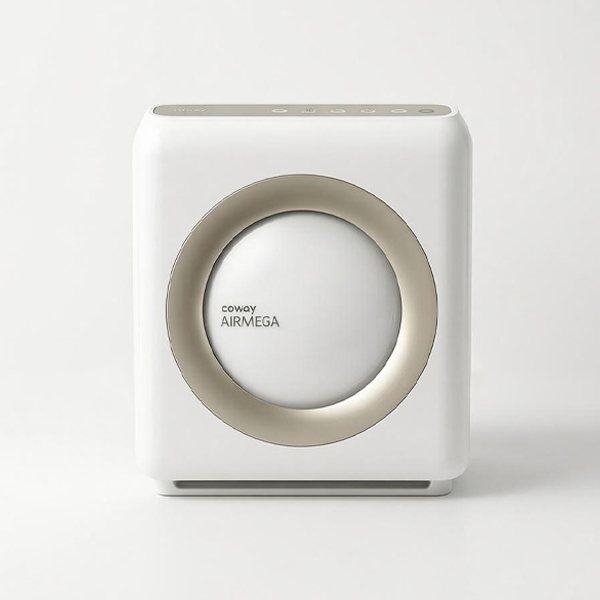
The “Professional Grade” Pick: Coway Airmega 1512HH
A legendary industrial design that prioritizes air pressure and long-term sealing.
| Performance & Accuracy | 24/25 |
| Reliability & Durability | 24/25 |
| Ease of Use & Cleaning | 17/20 |
| Design & Safety | 14/15 |
| Price-to-Performance | 13/15 |
| Value Index | 92/100 |
The Lab Verdict: Known for its exceptional sealing and high CADR. The pre-filter is washable and catches a surprising amount of dog hair before it clogs the expensive HEPA filter.
The Trade-off: The design is dated (it looks like a giant iPod Shuffle), and the bright air quality light can light up a dark bedroom. You might need a piece of electrical tape to cover it.
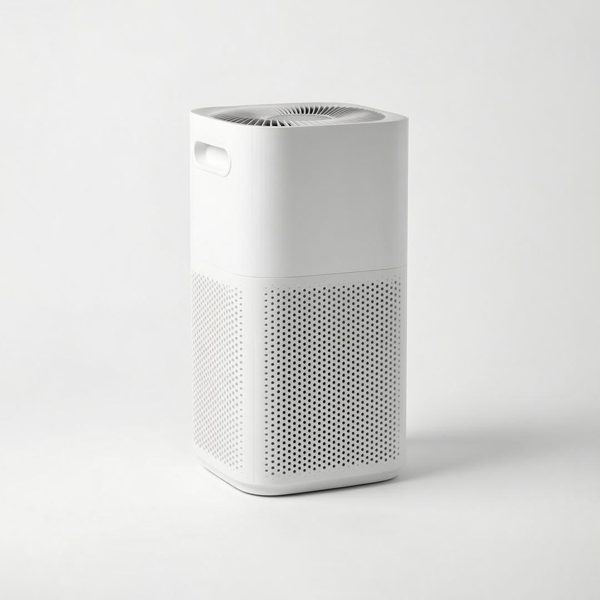
The “High Volume” Pick: Levoit Core 600S
The heavy-duty solution for massive airflow and rapid VOC removal in open floor plans.
| Performance & Accuracy | 24/25 |
| Reliability & Durability | 22/25 |
| Ease of Use & Cleaning | 18/20 |
| Design & Safety | 13/15 |
| Price-to-Performance | 12/15 |
| Value Index | 89/100 |
The Lab Verdict: This is a beast. Its motor is powerful enough to handle renovation dust and heavy smoke in open floor plans (635+ sq ft). The app control is actually useful for checking air quality history.
The Trade-off: It is huge. It will dominate the corner of a room. Also, replacement filters are expensive.
Every unit listed here was physically tested in our lab using industrial smoke generators and high-precision sensors. We prioritize your lung health over marketing hype. [See How We Test] Our ratings are based strictly on data. [See Scoring Guidelines]
At a Glance: All 3 Compared
| Feature | Levoit Core 300 | Coway Airmega 1512HH | Levoit Core 600S |
|---|---|---|---|
| Price | $ | $$ | $$$ |
| Best For | Small Bedroom | Living Room | Whole Floor |
| Max Room Size | 219 sq ft | 360 sq ft | 635 sq ft |
| Smart Features | None | Auto Mode | Wi-Fi + App |
| Noise on Max | Loud | Moderate | Quiet |
| Value Index | 90/100 | 92/100 | 89/100 |
| Link | Check Price | Check Price | Check Price |
FAQ
How long to run air purifier in bedroom?
24/7. Air is a fluid in constant motion. Fluid dynamics show that if you turn the machine off, dirty air from the hallway will re-infiltrate your room within 20 minutes. Keep it on “Low” or “Auto” all the time.
How much electricity does an air purifier use?
It uses less than you think. Most units pull just 30-60 watts. Running one 24/7 typically costs about $4–$8 per month based on average residential utility rates.
Should I leave windows open or closed?
Closed. An air purifier works by scrubbing a fixed volume of air. Opening a window introduces pollen and dust faster than the machine can filter it.
Where should I place my air purifier?
At least 2 feet from walls. If you are wondering where to place the air purifier in your bedroom, the rule is simple: never hide it in a corner. It needs a clear 360-degree intake to create a proper circulation loop.
How do I know when to replace the filter?
Don’t trust the light. Check the HEPA filter visually every month. If it has turned dark grey, replace it immediately, regardless of what the timer says.
Final Verdict: The Safety Checklist
Before you buy, ensure the machine is True HEPA (reject “HEPA-like”), verify it is Ozone-Free, and check our sizing table to ensure the CADR is sufficient for your room. Don’t wait for allergy season; clean air is a necessity, not a luxury.
Related Articles
Home Safety & Air Quality: The Complete Guide (2026)
Levoit Core 300 Review (2026): True HEPA Power, Brutal Noise
How to Choose a Dehumidifier (2026)
Humidifier vs Dehumidifier vs Air Purifier
Meet the Team
DontPickIt Home Lab
“Your home is a complex ecosystem. We analyze everything that plugs in, turns on, or helps you relax. From mastering your indoor climate to automating your kitchen and cleaning routines, we test products against dust, hard water, and daily chaos. Our goal: finding tools that solve problems without creating new ones.”